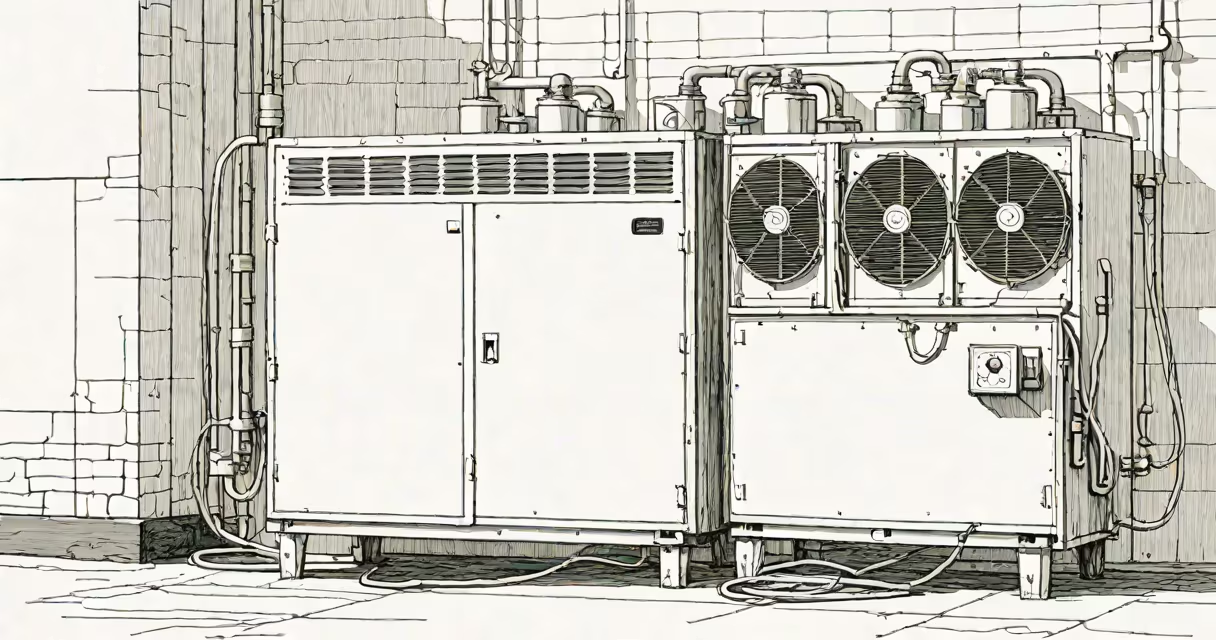
R22 refrigerant, also known as HCFC-22 or Freon, was a hydrochlorofluorocarbon widely used in air conditioning systems and heat pumps. It functioned as the cooling agent in vapor-compression refrigeration cycles.
R22 changed phases between liquid and gas to absorb and release heat. In an air conditioner, it would evaporate inside the unit, absorbing heat from indoor air. After compression, it would condense outside, releasing heat to the outdoors. This cycle repeated to maintain cool indoor temperatures.
R22 was primarily used in:
By the 2000s, R22 was found in roughly half of U.S. air conditioning units. Its production peaked at 160,000 tons annually in the 1990s.
The Montreal Protocol targeted R22 for elimination because it contributed to ozone depletion. Though less damaging than earlier CFCs, R22 still released chlorine atoms that destroyed ozone molecules. The U.S. banned its production in 2020, though existing units can still use recovered supplies.
Many people confuse R22 with newer R410A refrigerant, which contains no chlorine. Unlike R22, R410A doesn't harm the ozone layer. Another mistake is assuming all older AC units contain R22 - some used alternatives like R12.
I serviced an old R22 system last year where the homeowner wanted to convert to a modern refrigerant. We had to install new components because R22 systems aren't compatible with current alternatives.
Modern systems use R410A, R32, or R454B, which have lower global warming potential. These require different compressor oils and may need new expansion valves or other modifications.
For existing R22 systems, the EPA allows servicing with recycled or reclaimed R22 until 2030, when all uses will be prohibited.
According to the EPA, R22 emissions peaked at 32 million metric tons of CO2 equivalent in 1996. By 2020, they'd dropped to 1.7 million metric tons.