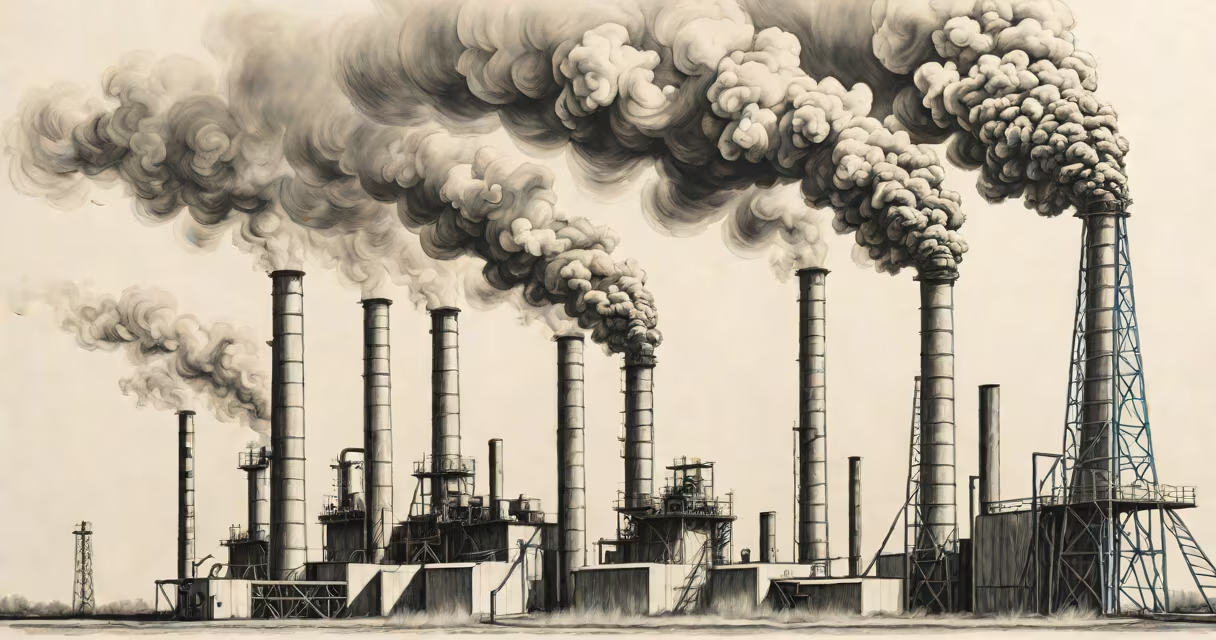
Burning fossil fuels releases carbon dioxide, methane, nitrogen oxides, sulfur dioxide, and particulate matter. These emissions contribute to climate change, air pollution, and respiratory diseases.
When fossil fuels burn, chemical reactions break down hydrocarbons into simpler molecules. This process releases energy as heat and produces byproducts like carbon dioxide (CO₂) and water vapor. Incomplete combustion generates additional pollutants such as carbon monoxide (CO) and volatile organic compounds (VOCs).
| Pollutant | Source | Impact |
|---|---|---|
| Carbon Dioxide (CO₂) | Complete combustion of any fossil fuel | Primary driver of global warming |
| Methane (CH₄) | Leaks during extraction and incomplete combustion | Potent greenhouse gas, 25x more effective than CO₂ |
| Nitrogen Oxides (NOₓ) | High-temperature combustion of fossil fuels | Forms smog and acid rain |
| Sulfur Dioxide (SO₂) | Burning sulfur-containing fuels like coal | Causes acid rain and respiratory issues |
| Particulate Matter (PM) | Incomplete combustion and impurities | Contributes to lung disease and heart problems |
These emissions trap heat in the atmosphere, contributing to global warming. According to the U.S. Environmental Protection Agency, CO₂ levels have increased by 40% since the Industrial Revolution. Burning fossil fuels also releases toxic pollutants that harm human health and ecosystems.
Many people believe that only CO₂ matters. However, methane and other pollutants also play significant roles in climate change and air quality. For example, methane leaks from natural gas extraction can offset the benefits of switching.
In 2023, a coal-fired power plant in Ohio emitted 6 million tons of CO₂ annually. This plant also released significant amounts of sulfur dioxide and particulate matter, contributing to local air pollution and respiratory illnesses in nearby communities.
Understanding what is released when burning fossil fuels highlights the urgent need for cleaner energy sources and stricter emission regulations. Transitioning to renewable energy and improving energy efficiency can reduce these harmful emissions and mitigate their impacts on the environment and public health.