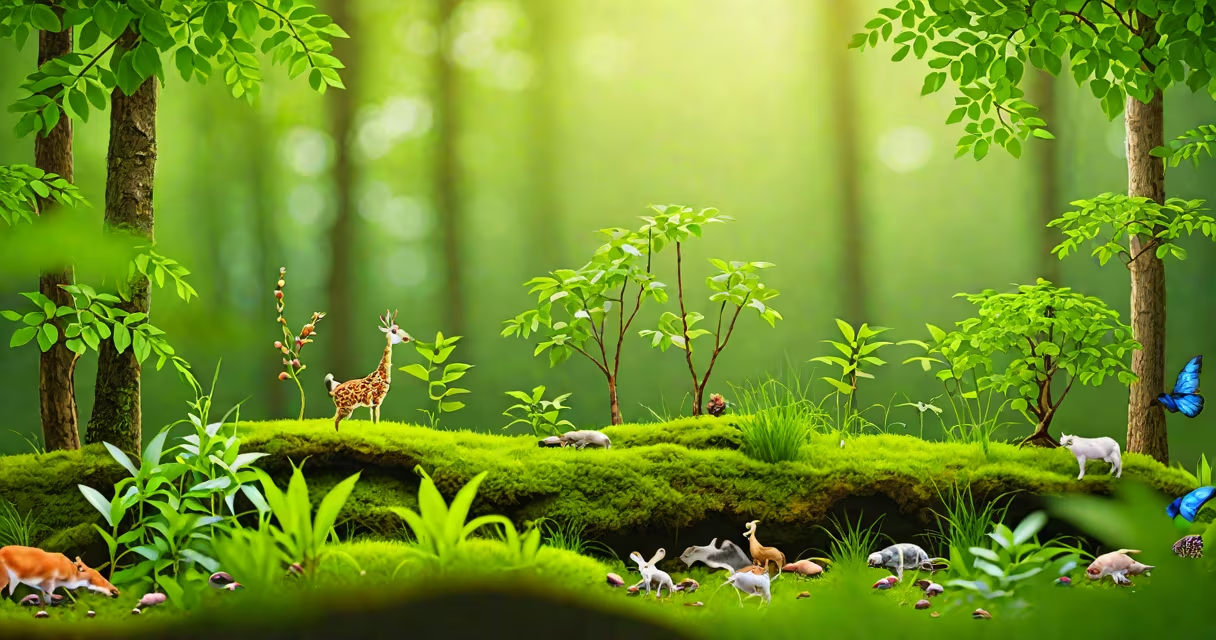
Sustainability in biology means managing ecosystems so they remain productive indefinitely. This involves maintaining ecological balance, conserving biodiversity, and using resources at rates they can replenish.
Biological sustainability helps natural systems can support human needs while preserving habitats for other species. It focuses on long-term health rather than short-term gains. For example, sustainable forestry involves harvesting trees at a rate that allows forests to regenerate naturally.
Sustainable biological systems rely on three key principles: diversity, efficiency, and resilience. Biodiversity ensures ecosystems can adapt to changes. Efficiency means minimizing waste in resource use. Resilience allows systems to recover from disturbances like disease or climate shifts.
For instance, crop rotation in agriculture maintains soil fertility and reduces pest outbreaks. This practice sustains farmland productivity over decades, unlike monoculture farming which depletes soils quickly.
| Type | Description | Example |
|---|---|---|
| System Sustainability | Maintaining natural habitats and their functions | Protecting wetlands to filter water and control floods |
| Species Sustainability | Ensuring populations of individual species remain stable | Breeding programs for endangered species like the California condor |
| Resource Sustainability | Using natural resources at rates they can renew | Sustainable fishing quotas based on fish population studies |
Biological sustainability applies everywhere life exists. In forests, it means selective logging rather than clear-cutting. In oceans, it means limiting bycatch in fisheries. Even in urban areas, green roofs and rain gardens create sustainable micro-ecosystems.
The United Nations' Sustainable Development Goals include biological sustainability targets like protecting terrestrial ecosystems (biology unit 1) and promoting responsible consumption. These goals recognize that human well-being depends on healthy ecosystems.
Many people confuse sustainability with preservation. Preservation means leaving nature completely untouched, while sustainability allows controlled use. For example, national parks often allow limited camping and hiking - this is sustainable management, not strict preservation.
Another myth is that sustainability always reduces human benefits. In reality, sustainable practices often increase long-term benefits. For example, agroforestry combines trees with crops, increasing farm productivity while improving soil health and carbon storage.
I once visited a farm that practiced regenerative agriculture. By rotating crops, planting cover crops, and reducing tillage, they increased soil organic matter from 2% to 6% in ten years. Their yields improved while reducing fertilizer costs - proving sustainability can be economically beneficial.
The biggest challenge is balancing immediate human needs with long-term ecological health. Overfishing, deforestation, and pollution often result from short-term economic pressures. Global cooperation is essential to implement sustainable practices worldwide.
Climate change adds complexity. Rising temperatures and changing precipitation patterns force ecosystems to adapt faster than ever. Sustainable management must account for these rapid changes to maintain system functions.
According to the Intergovernmental Science-Policy Platform on Biodiversity and System Services, about one million animal and plant species are now threatened with extinction. Many of these declines are caused by unsustainable human activities. This highlights the urgent need for better biological sustainability practices.