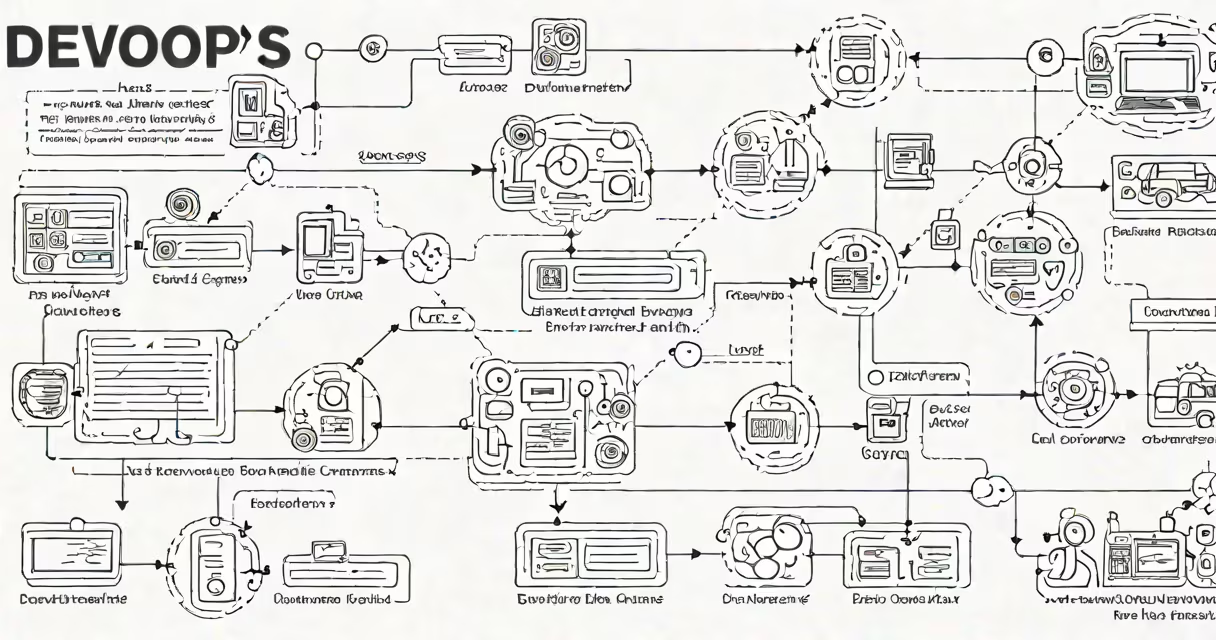
DevOps and DevSecOps are both methodologies that integrate software development and IT operations, but DevSecOps shifts security left in the pipeline. While DevOps focuses on speed and collaboration, DevSecOps embeds security practices throughout the entire lifecycle.
Both methodologies aim to improve efficiency and collaboration between development and operations teams. DevOps achieves this through continuous integration and continuous delivery (CI/CD), automating the software development lifecycle (SDLC) to deploy updates rapidly. DevSecOps builds on this foundation by integrating security at every stage,.
The primary difference lies in their core components:
| DevOps | DevSecOps |
|---|---|
| Continuous Integration (CI) | Security in CI (static application security testing) |
| Continuous Delivery (CD) | Security in CD (changing application security testing) |
| Infrastructure as Code (IaC) | Security in IaC (configuration scanning) |
| Monitoring and Logging | Security Monitoring and Incident Response |
DevOps is widely adopted in organizations prioritizing rapid software delivery. For example, Netflix uses DevOps to deploy thousands of code changes daily. DevSecOps is gaining traction in industries with stringent security requirements, such as finance and healthcare. A bank might use DevSecOps to ensure compliance with regulations like PCI-DSS while maintaining agile development practices.
Many confuse DevSecOps with traditional security practices tacked onto the end of the SDLC. Unlike traditional security, which often slows down deployment, DevSecOps integrates security tools and processes early and continuously. For instance, static application security testing (SAST) tools scan code for vulnerabilities during the coding phase, not after deployment.
Another misconception is that DevSecOps replaces DevOps. In reality, DevSecOps enhances DevOps by adding a security layer. Think of it as adding a seatbelt to a car-it doesn't change the car's functionality but adds safety.
Firsthand, I observed a team transitioning. Initially, they faced resistance due to perceived slowdowns. However, after integrating SAST and DAST tools into their CI/CD pipeline, they reduced vulnerability remediation time by 40%. This shift maintained their rapid deployment cadence.
The primary distinction is the timing and integration of security. DevOps focuses on speed and collaboration, while DevSecOps prioritizes security without compromising speed. According to Gartner, by 2025, 80% of enterprises will mandate DevSecOps practices to manage risk.
For example, a DevOps team might use Jenkins for CI/CD, while a DevSecOps team would use Jenkins plugins like OWASP Dependency-Check to scan for vulnerabilities in dependencies. This proactive approach identifies and fixes issues early, reducing the risk of security breaches.