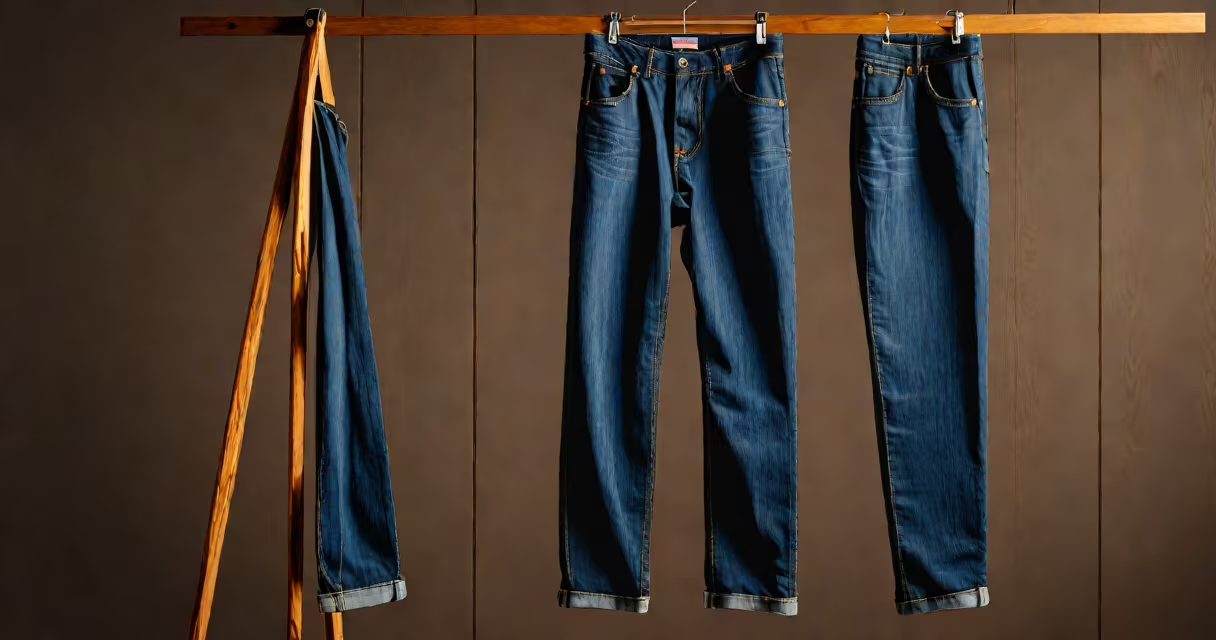
Trousers are a type of lower-body garment with separate legs, typically worn from the waist to the ankles. Originating in Central Asia, they became widespread in Europe by the 17th century.
Trousers consist of two fabric tubes connected by a crotch seam, with waistbands or belts for fastening. Modern versions often include pockets, zippers, and adjustable waistbands. The most common materials are cotton, polyester, wool, and denim.
| Type | Characteristics | Common Uses |
|---|---|---|
| Jeans | Durable denim fabric, five-pocket design | Casual wear |
| Chinos | Cotton twill, less formal than dress trousers | Business casual |
| Dress trousers | Wool or wool blends, creased front | Formal wear |
| Cargo trousers | Multiple large pockets, loose fit | Workwear, outdoor activities |
Trousers are worn worldwide for both practical and cultural reasons. Their separate leg design allows for greater freedom of movement compared to earlier garments like tunics or robes. In Western cultures, trousers became a symbol of gender equality when women adopted them in the early 20th century.
According to the BBC, the global trousers market was valued at $120 billion in 2020, with denim jeans accounting for about 40% of sales. This demonstrates their enduring popularity across different demographics.
Many people confuse trousers with pants, but there's a key difference: in British English, "pants" refers to undergarments, while "trousers" means outerwear. In American English, "pants" is the standard term for both undergarments and outerwear.
Another misconception is that trousers are exclusively male attire. While historically true, modern fashion has made trousers unisex. For example, women's dress trousers are now standard in professional settings, replacing skirts as acceptable office wear.
I noticed this shift firsthand when researching workplace attire trends. Many companies now include trousers in their dress codes for all genders, reflecting changing social norms.
In some cultures, trousers remain controversial. For instance, in certain religious traditions, women wearing trousers may be seen as inappropriate. However, this perspective is increasingly challenged as global fashion trends promote gender-neutral clothing.
The United Nations reports that in some Middle Eastern countries, women wearing trousers in public has led to legal challenges, though progressive movements continue to push for change.