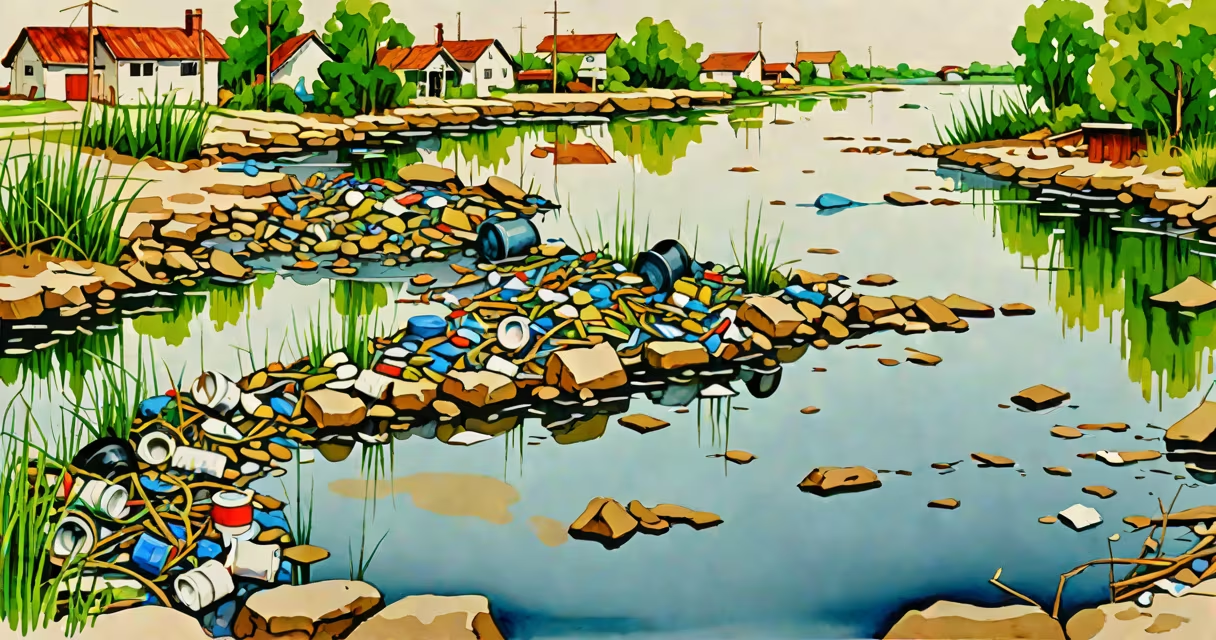
Water pollution causes severe harm to ecosystems, human health, and economies by contaminating freshwater sources with chemicals, waste, and pathogens.
Polluted water disrupts aquatic life cycles. For example, agricultural runoff containing nitrogen and phosphorus triggers algal blooms that deplete oxygen, creating dead zones. The Gulf of Mexico's dead zone, now larger than New Jersey, results from this process.
| Type | Source | Primary Pollutant |
|---|---|---|
| Chemical | Factories, sewage | Heavy metals, pesticides |
| Microbiological | Sewage, animal waste | Bacteria, viruses |
| Nutrient | Agricultural runoff | Nitrogen, phosphorus |
| Suspended Matter | Construction sites | Sediment, debris |
Chemical pollution, such as mercury from industrial discharge, accumulates in fish and enters the food chain. The Minamata disaster in Japan, where mercury poisoning caused severe neurological damage, remains a stark warning.
Drinking polluted water spreads diseases like cholera and dysentery. In 2014, Flint, Michigan's lead-contaminated water caused irreversible developmental damage in children. The Centers for Disease Control and Prevention (CDC) links waterborne pathogens to 7.2 million illnesses annually in the U.S.
Water pollution costs global economies $260 billion yearly in healthcare and lost productivity. The World Health Organization (WHO) estimates that investing in clean water yields a $4 return for every $1 spent.
Many assume water pollution only affects developing nations. However, the U.S. Environmental Protection Agency (EPA) reports that 9 million Americans rely on contaminated drinking water.
I once tested local streams near an abandoned factory. Elevated lead levels persisted decades later, proving pollution's lasting effects.
The impact of water pollution extends beyond environmental damage, threatening public health and economic stability. Addressing this crisis requires global cooperation and stricter regulations.