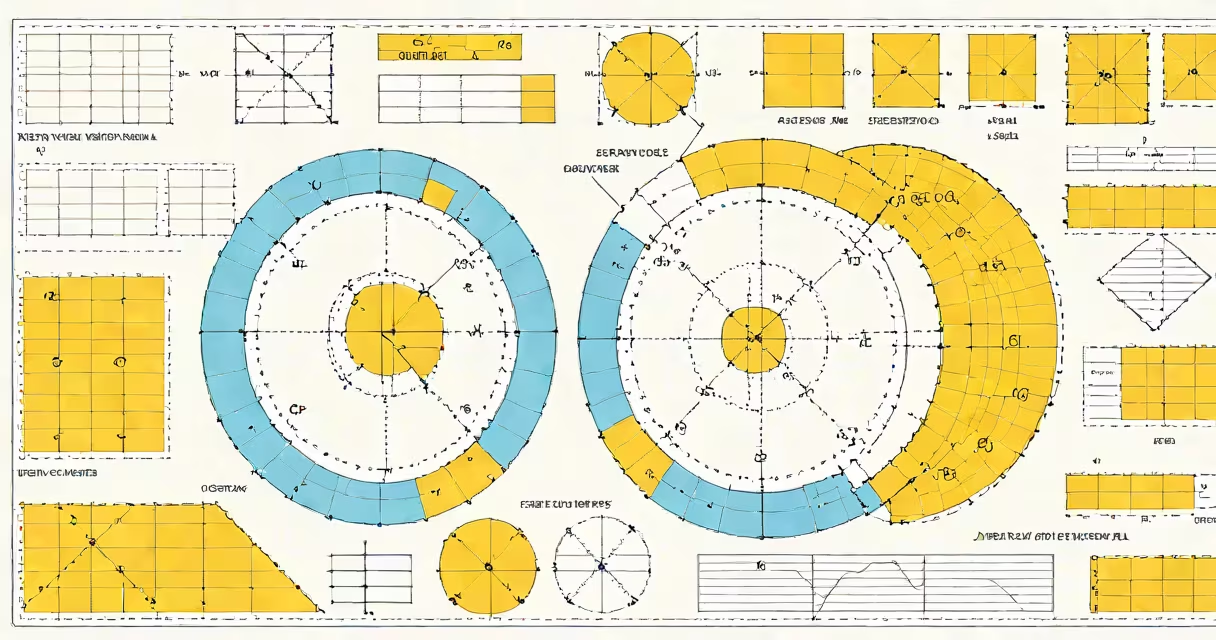
The formula for area calculates the size of a surface or space inside a shape. It varies by shape but always uses basic measurements like length, width, or radius.
Area measures space in square units (e.g., square inches, square meters). The formula depends on the shape's sides and angles. For example, a square's area is side length squared, while a circle's area uses pi times radius squared.
| Shape | Formula | Example |
|---|---|---|
| Square | side × side | A square with 4-inch sides has an area of 16 square inches. |
| Rectangle | length × width | A rectangle with 5-inch length and 3-inch width has an area of 15 square inches. |
| Triangle | (base × height) ÷ 2 | A triangle with a 6-inch base and 4-inch height has an area of 12 square inches. |
| Circle | π × radius² | A circle with a 3-inch radius has an area of about 28.27 square inches. |
Many people confuse perimeter (total length around a shape) with area. For example, a square with 4-inch sides has a perimeter of 16 inches but an area of 16 square inches. The numbers may match, but they measure different things.
Area calculations are essential in construction, landscaping, and interior design. For instance, knowing the area of a room helps determine how much paint or flooring to buy. In agriculture, area measurements help calculate crop yields.
I once helped a friend install new flooring in their living room. By measuring the room's length and width, we calculated the area to order the correct amount of tiles. This saved time and money by avoiding excess materials.
For complex shapes, area can be calculated by breaking them into simpler parts. For example, an L-shaped room can be divided into two rectangles, and their areas added together.