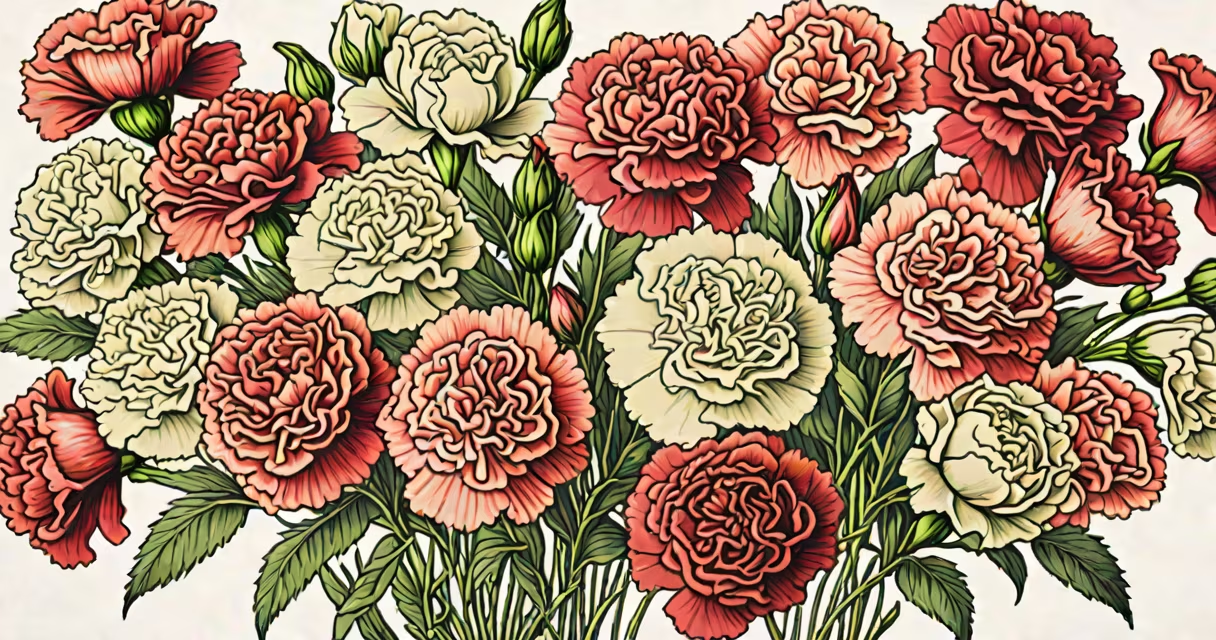
A carnation is a flower with deep symbolic meaning, representing love, fascination, and distinction. Its interpretation varies by color, making it a versatile choice for different occasions.
Carnations have been cherished for centuries, often associated with religious and cultural significance. In Christian tradition, they're linked to the Virgin Mary, earning them the nickname "Mary's flower." Their frilly petals were thought to resemble flames, symbolizing divine love. Beyond religion, carnations represent pride, strength, and good luck.
Each carnation color carries a unique message:
| Color | Meaning |
|---|---|
| Red | Deep love and affection |
| Pink | Admiration and gratitude |
| White | Pure love and good luck |
| Yellow | Disdain or rejection (contrary to popular belief, this is not always negative) |
| Purple | Capriciousness or extravagance |
For example, red carnations are a classic choice for Valentine's Day, while pink carnations are often given to mothers on Mother's Day.
Many assume yellow carnations always signify jealousy or disappointment. However, in some cultures, they represent joy and happiness. The meaning depends on context and cultural background.
I once gifted a bouquet of pink carnations to a friend recovering from surgery. The gesture was met with tears of gratitude, reinforcing how deeply these flowers resonate with emotions like appreciation and care.
Carnations have historical roots in Europe and Asia. The Greeks and Romans associated them with gods and goddesses, while in the Ottoman Empire, they symbolized beauty and refinement. Today, they're cultivated worldwide, with Spain being a major producer.