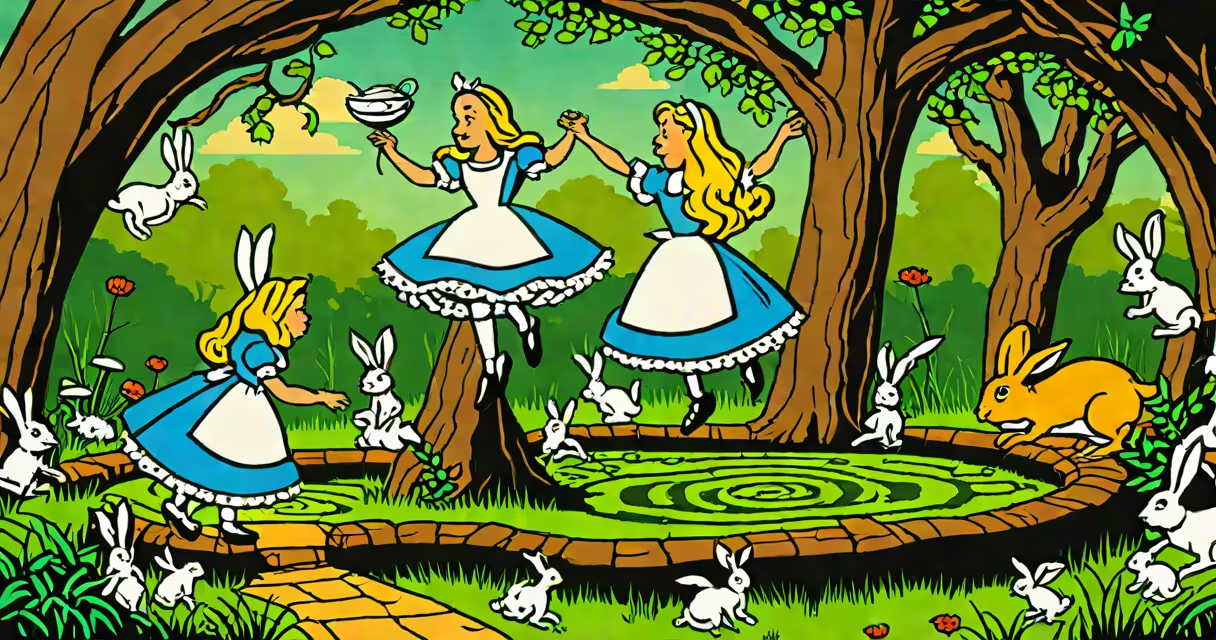
*Alice in Wonderland* is a Victorian-era satire disguised as children's literature, mocking the absurdity of adult society through nonsensical characters and illogical events. Lewis Carroll's 1865 novel *Alice's Adventures in Wonderland* critiques political, social, and educational norms while playing with language and logic.
The plot follows seven-year-old Alice as she falls into a fantastical world after chasing a talking rabbit. She encounters bizarre creatures, attends a mad tea party, and plays croquet with flamingos. The story's charm lies in its defiance of reason, mirroring the confusion of growing up in a rigid society.
| Character | Symbolism |
|---|---|
| The White Rabbit | Represents the relentless passage of time and societal pressures. |
| The Mad Hatter | Critiques the stifling conventions of Victorian social etiquette. |
| The Queen of Hearts | Satirizes arbitrary authority and the legal system. |
| The Cheshire Cat | Embodies paradox and the absurdity of existence. |
Many assume *Alice in Wonderland* is pure fantasy, but Carroll embedded sharp commentary on politics, education, and religion. For example, the Mad Hatter's tea party mirrors the stagnation of Victorian social norms, while the Queen of Hearts' "Off with their heads!" mocks authoritarianism. The book's playful tone masks its subversive edge.