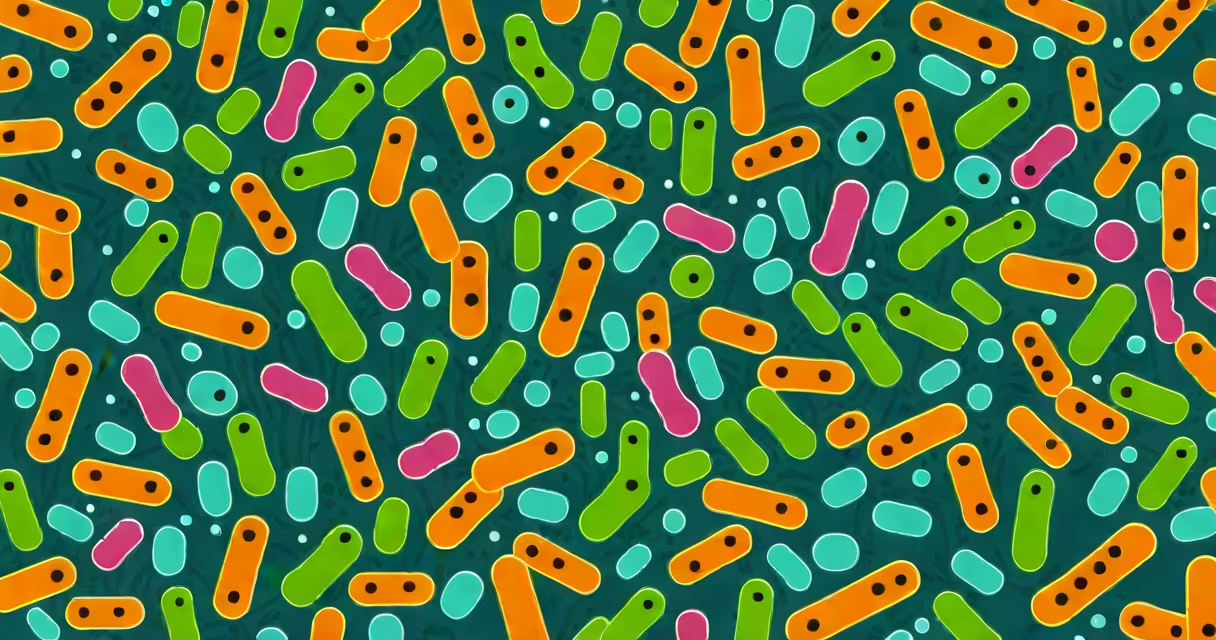
Bacteria multiply through a process called binary fission, where a single cell divides into two genetically identical cells.
During binary fission, the bacterial DNA replicates, and the cell elongates. The cell membrane pinches inward, creating two separate cells. This process typically takes 20 minutes to several hours, depending on the bacterial species and environmental conditions.
While binary fission is the primary method of bacterial reproduction, other forms of growth exist:
Bacteria use binary fission for rapid population growth, allowing them to colonize new environments quickly. For example, Chlamydia trachomatis, the bacterium responsible for chlamydia, uses binary fission to replicate within host cells.
The speed of bacterial multiplication varies. Escherichia coli can divide every 20 minutes under optimal conditions, while others may take hours or days. This rapid growth enables bacteria to adapt to changing environments and outcompete other microorganisms.
Many people confuse bacterial multiplication with mitosis, the process of cell division in eukaryotes. Unlike mitosis, binary fission does not involve spindle fibers or a complex series of phases. Instead, it is a simpler, more efficient process suited to the prokaryotic nature of bacteria.
Another misconception is that all bacteria reproduce sexually. In reality, most bacteria reproduce asexually through binary fission, though some can exchange genetic material through processes like conjugation or transformation.
I once observed bacterial growth in a lab setting, where a culture of E. coli doubled every 20 minutes. Within six hours, a single colony could produce billions of cells, demonstrating the incredible efficiency of binary fission.
Understanding bacterial multiplication is important in medicine, food safety, and biotechnology. Antibiotics work by targeting specific stages of bacterial growth, while food preservation techniques aim to inhibit bacterial reproduction.
In biotechnology, bacteria are used to produce insulin, vaccines, and other biomolecules. Their rapid growth and ease of manipulation make them ideal for these applications.
Bacterial multiplication also plays a role in infections. Pathogens like Staphylococcus aureus can quickly overwhelm the immune system, leading to severe infections if left untreated.