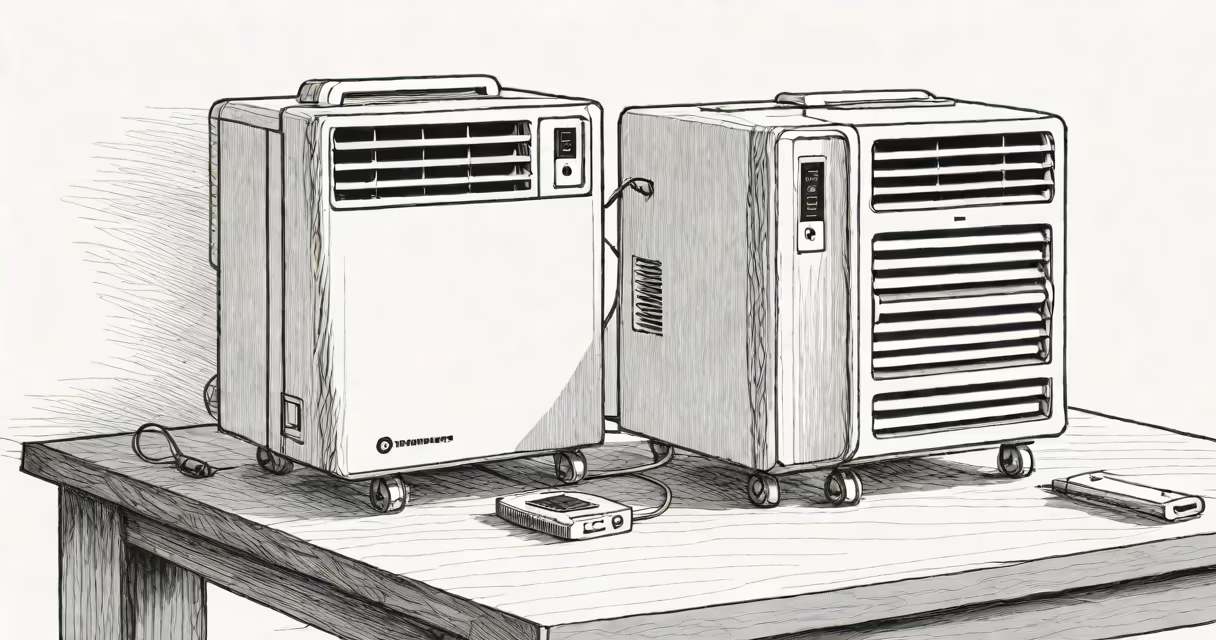
The smallest air conditioner is typically a portable or window unit measuring less than 12 inches in height and width, designed for cooling areas under 150 square feet. These units prioritize compactness without sacrificing essential cooling functions.
Small air conditioners operate like larger models but with scaled-down components. They draw in warm air, pass it over cold coils to remove heat, then expel the cooled air back into the room. The key difference is their reduced capacity, making them ideal for personal spaces rather than entire rooms.
Small air conditioners come in several forms, each suited to different needs:
| Type | Size Range | Cooling Capacity | Best For |
|---|---|---|---|
| Portable AC Units | 12" x 12" x 18" | 5,000-10,000 BTU | Small rooms, dorms, offices |
| Window Air Conditioners | 14" x 16" x 12" | td>6,000-8,000 BTUBedrooms, studios | |
| Personal Cooling Devices | Varies | N/A (spot cooling) | Desks, chairs, travel |
Many assume small air conditioners are less effective than larger models. However, they're designed for efficiency in confined spaces. A 6,000 BTU unit can effectively cool a 250-square-foot room if properly sized and maintained. Overcooling a small space wastes energy and reduces comfort.
Small air conditioners excel in environments where larger units are impractical. For example, a 7,000 BTU window unit can maintain comfortable temperatures in a 300-square-foot home office. Portable units offer flexibility, allowing users to move them between rooms as needed. Personal cooling devices, such as neck fans or mini evaporative coolers, provide targeted relief without occupying wall or floor space.
The smallest air conditioner models balance portability and performance, offering solutions for tight spaces. Whether you need a portable unit, a window model, or a personal cooling device, selecting the right size ensures efficient and effective cooling without unnecessary bulk.