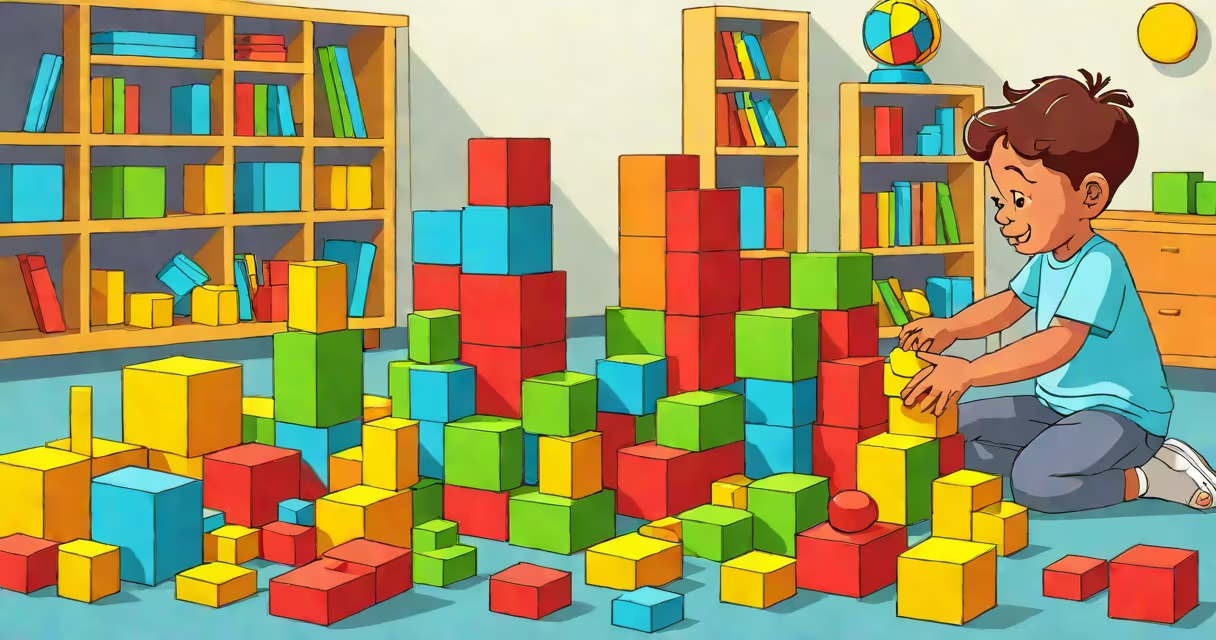
The preoperational stage is the second phase in Piaget's theory of cognitive development, where children aged 2-7 begin using symbols and language but lack logical reasoning skills. This stage follows the sensorimotor stage and precedes concrete operations.
During this stage, children develop the ability to think about objects and events that aren't physically present. They engage in pretend play, sort objects by single features, and understand basic categories. However, they struggle with concepts like conservation (the idea that quantity remains the same despite changes in appearance). For example, a child might think a tall, thin glass holds more liquid than a short, wide one, even if both contain the same amount.
The preoperational stage is marked by several key traits:
Understanding the preoperational stage helps educators and parents design age-appropriate activities. For instance, teachers use storytelling and role-playing to build symbolic thinking. Parents might avoid correcting a child's misconceptions directly, instead guiding them through gentle questioning.
Many people confuse the preoperational stage with the sensorimotor stage, which occurs earlier (birth to 2 years). Unlike sensorimotor babies, preoperational children can think symbolically but still lack logical reasoning. Another mistake is assuming all children progress at the same rate. Development varies widely due to individual differences and environmental factors.
I once observed a 4-year-old pouring water between different-shaped glasses, insisting one held "more" because it was taller. This demonstrated centration-the child focused solely on height, ignoring the width. By gently refilling both glasses, I helped the child see the quantities were equal, introducing early conservation concepts.
The preoperational stage is a important period where children develop symbolic thinking but struggle with logic. Recognizing these limitations allows caregivers to support cognitive growth effectively.