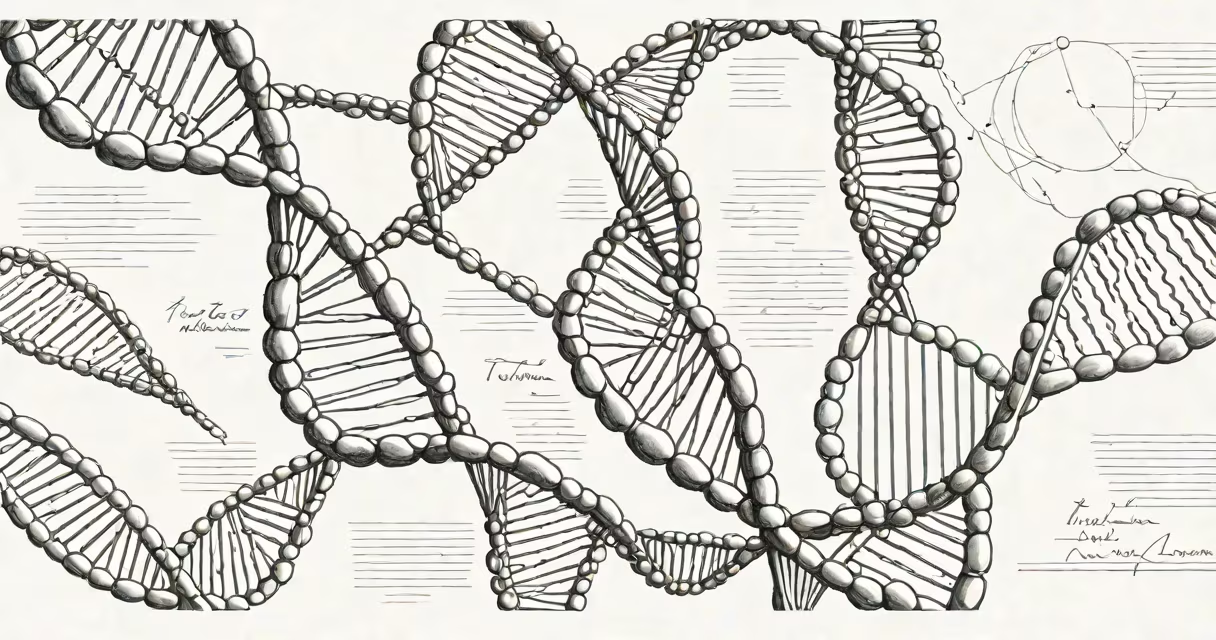
Transcription and translation are two steps in gene expression. Transcription copies DNA into RNA, while translation builds proteins using RNA instructions.
During transcription, an enzyme called RNA polymerase reads a gene's DNA sequence and synthesizes a complementary strand of messenger RNA (mRNA). This occurs in the nucleus of eukaryotic cells. The mRNA then moves to the cytoplasm, where ribosomes translate it into protein.
For example, the human insulin gene is transcribed into pre-mRNA, which is processed into mature mRNA before leaving the nucleus. The entire process takes about 10 minutes per gene.
| Type | Function | Location |
|---|---|---|
| Messenger RNA (mRNA) | Carries protein-building instructions | Cytoplasm |
| Transfer RNA (tRNA) | Delivers amino acids to ribosomes | Cytoplasm |
| Ribosomal RNA (rRNA) | Forms ribosome structure | Nucleolus and cytoplasm |
Translation occurs at ribosomes, which read the mRNA sequence in groups of three nucleotides called codons. Each codon specifies a particular amino acid. Transfer RNAs (tRNAs) bring the correct amino acids to the ribosome, where they're linked together to form a protein.
For instance, the mRNA sequence AUG codes for methionine, the first amino acid in most proteins. The process continues until the ribosome encounters a stop codon, signaling the end of the protein chain.
Many people confuse transcription and translation, thinking they're the same process. While both are essential for protein synthesis, they occur in different cellular locations and involve distinct molecules. Transcription happens in the nucleus (for eukaryotes), while translation occurs in the cytoplasm at ribosomes.
Another misconception is that each gene codes for only one protein. In reality, a single gene can produce multiple protein variants through alternative splicing during mRNA processing.
I once observed this firsthand in a biology lab, watching how different genes were expressed under varying conditions. It was fascinating to see how the same DNA sequence could lead to different protein outcomes based on environmental factors.
Transcription and translation are fundamental to life. Errors in these processes can lead to diseases like cancer or genetic disorders. Understanding them helps scientists develop treatments and design synthetic biological systems.
For example, mRNA vaccines like those developed for COVID-19 rely on this process. The vaccine introduces mRNA instructions for the spike protein, prompting cells to produce it and trigger an immune response.