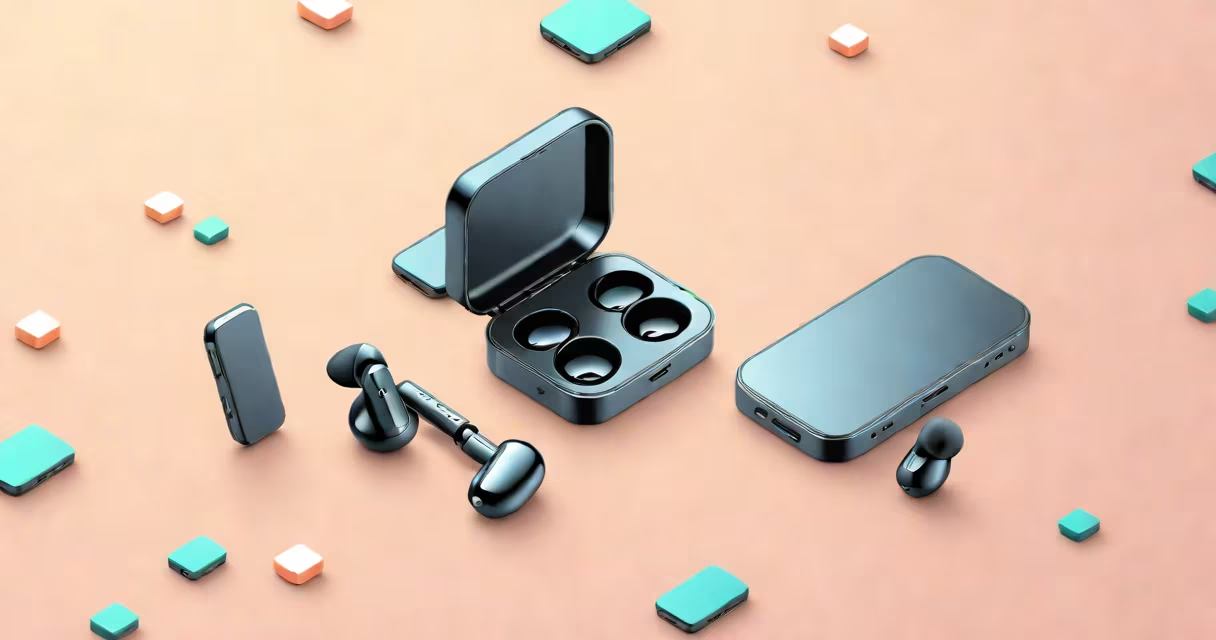
TWS stands for True Wireless Stereo, a technology that allows two speakers or earbuds to play synchronized audio independently of each other. Unlike traditional wireless stereo systems that rely on a wired connection between left and right channels, TWS devices connect directly to the source device via Bluetooth.
Each TWS speaker contains its own Bluetooth receiver and battery. When paired with a source device, both speakers receive the same audio signal and synchronize playback automatically. This creates a wireless stereo soundstage without the need for physical connections between the speakers.
The synchronization process happens through low-latency Bluetooth protocols like Bluetooth 5.0 or later. The primary speaker (usually the right one) communicates with the source device and relays timing information to the secondary speaker to maintain audio alignment.
| Device Type | Connection Method | Typical Use Case |
|---|---|---|
| Wireless Earbuds | Direct to phone/tablet | Personal listening |
| Portable Speakers | Direct to phone/tablet | Outdoor gatherings |
| Home Audio Systems | Through a hub or receiver | Living room entertainment |
Many people confuse TWS with regular Bluetooth stereo. The key difference is that TWS devices don't need a wired connection between them - they communicate wirelessly with each other and the source device. Another misconception is that TWS only works with earbuds - it applies to any pair of wireless speakers.
One non-obvious fact is that TWS systems often have a primary and secondary speaker. If the primary speaker loses connection, the secondary speaker may continue playing in mono mode until the primary reconnects.
I tested a pair of JBL Charge 5 speakers using TWS mode. After pairing both speakers to my phone, they automatically synchronized and created a surround sound effect. The setup took less than 30 seconds, and the audio remained perfectly in sync during my entire music playlist.
When I moved one speaker to another room, the audio quality degraded slightly due to Bluetooth range limitations, but the connection held for about 30 feet before dropping. This demonstrated both the strengths and limitations of current TWS technology.
As Bluetooth technology improves, we can expect better synchronization, longer ranges, and more stable connections. Some manufacturers are experimenting with multi-speaker TWS systems that could create immersive home theater experiences without wires.
According to the Bluetooth Special Interest Group, TWS shipments are expected to grow in coming years as more consumers adopt wireless audio solutions for both personal and home use.