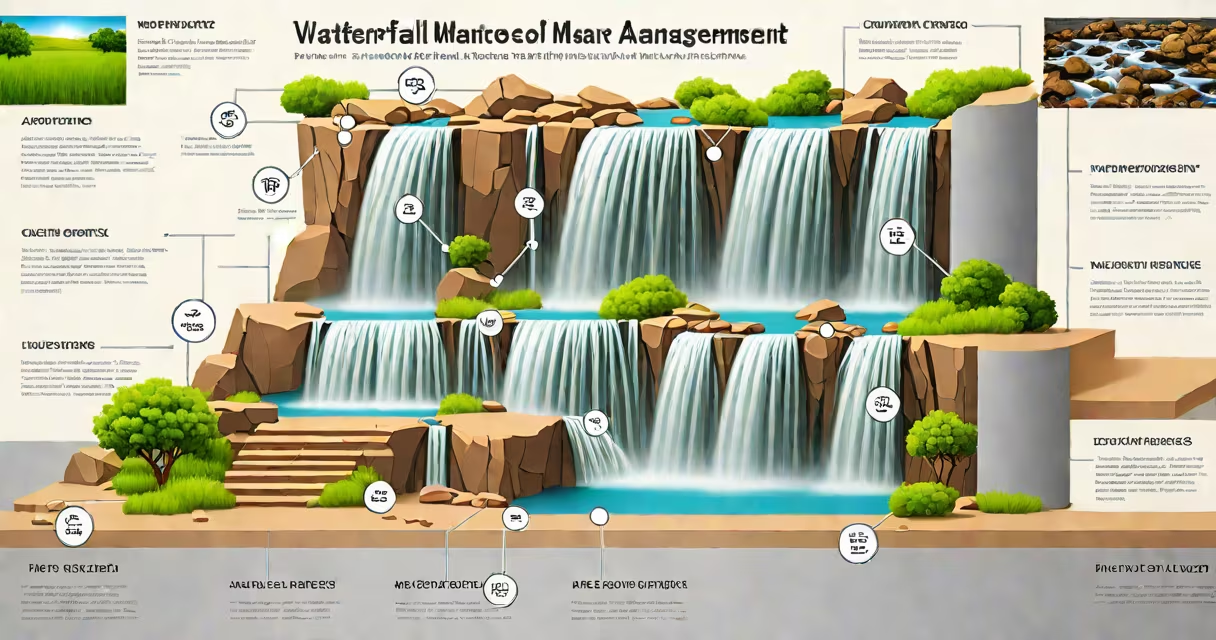
Waterfall project management is a linear, sequential approach to completing projects in distinct phases, where each phase must be completed before moving on to the next. This methodology is widely used in software development and other industries where clear requirements and structured planning are essential.
The waterfall model operates through a series of predefined stages, each with specific deliverables and a review process to ensure quality before proceeding. The key characteristic is that once a phase is completed, it is not revisited. This contrasts with iterative methods like agile, where flexibility and frequent revisions are central.
The traditional waterfall model consists of five primary phases:
| Phase | Description |
|---|---|
| Requirements | Gathering and documenting all necessary project details and stakeholder expectations. |
| Design | Creating a system design based on the requirements, including architecture, components, and interfaces. |
| Implementation | Writing the actual code or developing the product based on the design specifications. |
| Verification | Testing the product to ensure it meets the requirements and functions correctly. |
| Maintenance | Providing ongoing support and updates to address any issues or changes post-deployment. |
Waterfall is particularly effective in environments where requirements are well-understood and unlikely to change. It is commonly used in:
According to the Project Management Institute (PMI), waterfall is favored in industries where compliance and documentation are important, as each phase produces thorough records.
Many confuse waterfall with agile, assuming waterfall is rigid and outdated. However, waterfall excels in stability and predictability, while agile thrives in adaptability. Another misconception is that waterfall cannot accommodate changes, but in reality, changes can be incorporated at the cost of rework and additional planning.
Imagine constructing a house using the waterfall method. You wouldn't start building the walls until the foundation was perfectly laid and inspected. Similarly, you wouldn't install plumbing before framing the walls. Each phase must be completed and verified before moving forward, ensuring a solid, well-planned result.
I once managed a small construction project using waterfall principles. By strictly following each phase-design, permits, foundation, framing, etc.-we avoided costly mistakes and finished on time. The structured approach ensured everyone knew their responsibilities and deadlines.
For projects requiring flexibility, methodologies like agile or hybrid models may be more suitable. Agile allows for iterative progress and frequent feedback, making it ideal for changing environments. However, waterfall remains the go-to for projects with stable, well-defined goals.