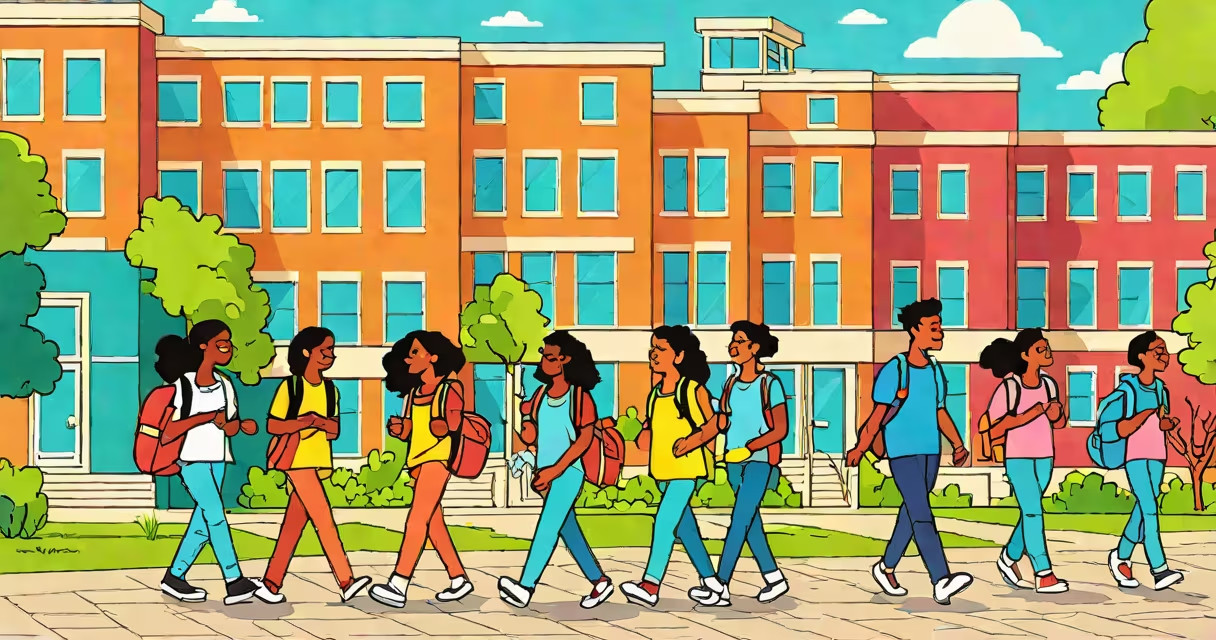
Schools in the United States are divided into public, private, and charter categories, each offering distinct educational approaches. These institutions serve students from preschool through higher education, with specialized programs addressing unique learning needs.
U.S. schools are typically organized into four main levels:
The three primary school types differ in funding, admission policies, and educational philosophies.
| Type | Funding | Admission | Key Features |
|---|---|---|---|
| Public Schools | Government-funded | Zoned attendance areas | Free education, diverse student bodies, standardized curricula |
| Private Schools | Tuition-based | Selective admissions | Specialized programs, smaller class sizes, religious affiliations common |
| Charter Schools | Public funding | Lottery systems | Independent governance, new teaching methods |
Many schools offer specialized programs to meet specific educational needs:
After high school, students can pursue various higher education paths:
For those interested in degree specializations, explore how many kinds of pronouns are there or investigate bachelor's degree types.
Many people confuse charter schools with private schools due to their independent management. However, charter schools receive public funding and must admit students through lottery systems, unlike private schools that charge tuition and have selective admissions.
Another frequent misunderstanding involves magnet schools. While they do focus on specific subjects, they remain part of the public school system and don't charge tuition, unlike specialized private schools.
When researching school options, it's essential to understand these distinctions to make informed educational choices for your child.