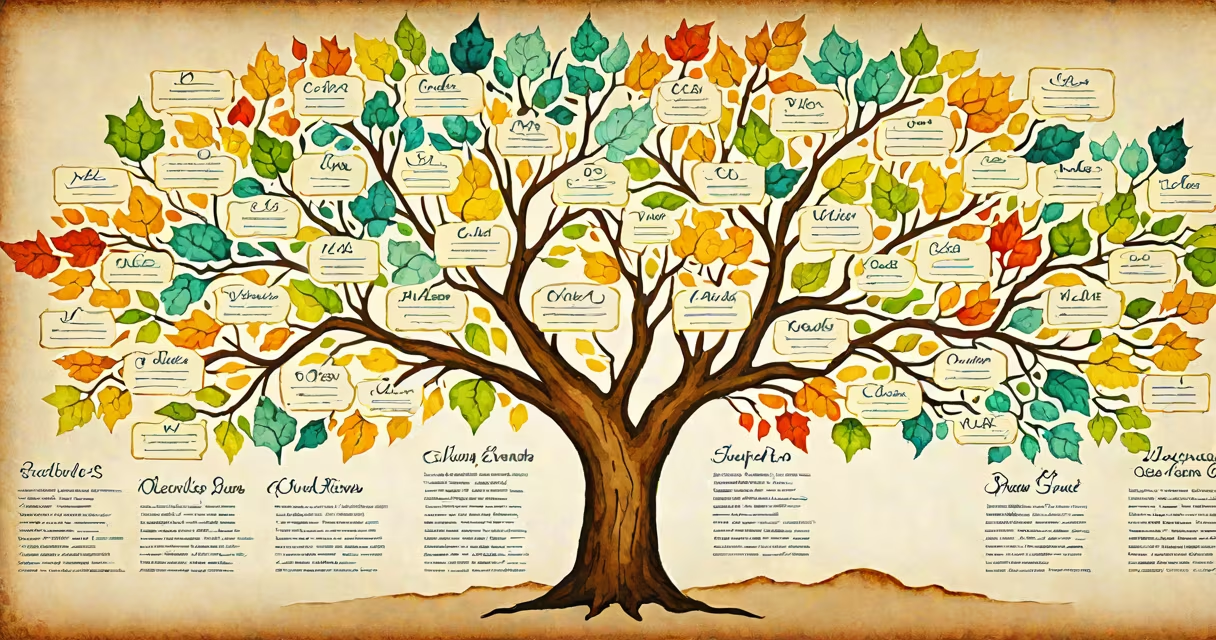
A family name, also called a surname or last name, is a hereditary name shared by members of a family. It follows the given name to identify lineage and group affiliation.
Family names function as identifiers within societies. They trace ancestry, distinguish individuals, and connect people to their heritage. Most cultures pass family names, though methods vary.
| Type | Origin | Example |
|---|---|---|
| Patronymic | Derived from father's name | Johnson (son of John) |
| Occupational | Based on profession | Smith (blacksmith) |
| Geographic | From place of origin | Hill (from a hillside area) |
| Descriptive | Physical traits | Short |
Family names appear on legal documents, academic records, and professional materials. They help governments track populations and businesses manage client relationships. Culturally, they preserve family histories and honor ancestors.
According to the U.S. Census Bureau, the most common surname in America is Smith, held by about 2.4 million people. This reflects both historical occupations and naming traditions.
Many assume family names always indicate direct lineage. However, adoption, marriage, and legal changes often alter surnames. In some cultures, women retain maiden names or combine them with spouses'.
I once helped a client research her ancestors' names. We discovered her great-grandmother had changed her surname after immigration, complicating the search. This highlighted how fluid family names can be.
In China, surnames often derive from ancient clans and appear before given names. Korean names follow similar patterns, with a limited set of about 250 surnames. In Spain, compound surnames combine both parents' last names.
For more on how naming traditions vary globally, see how about your family.
Family names connect individuals to their past and community. They appear in historical records, helping researchers trace migrations and social changes. Understanding your surname can reveal fascinating details about your heritage.