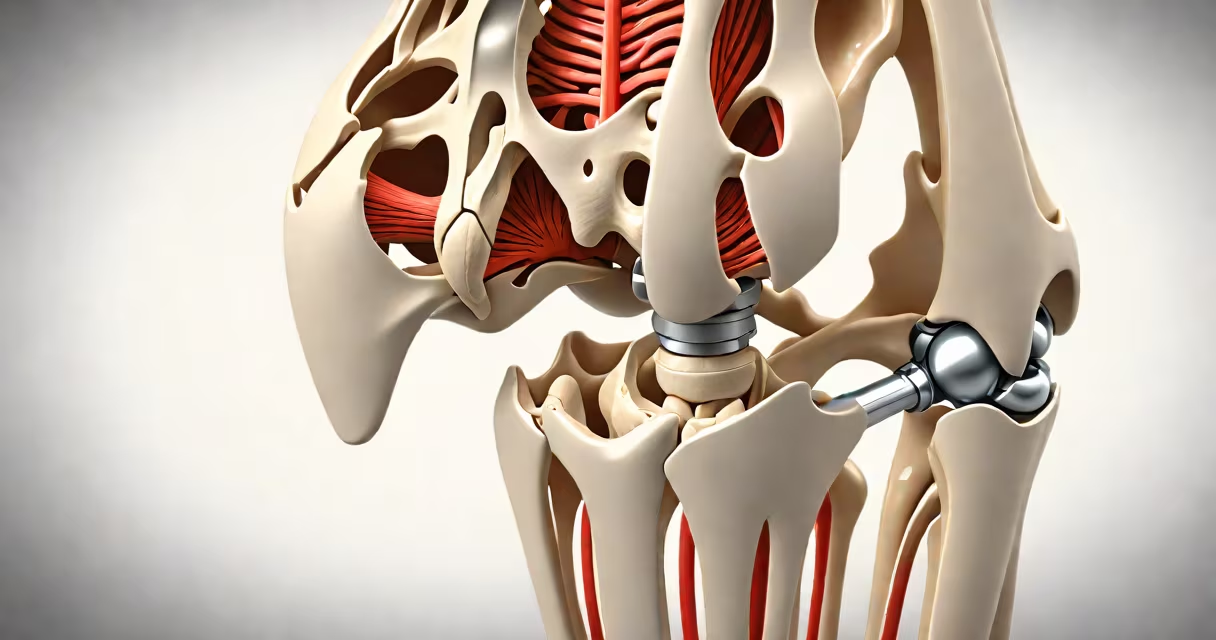
The ACL (anterior cruciate ligament) is a key knee ligament connecting your thighbone to your shinbone, stabilizing the joint during rotation and forward motion. Unlike muscles, it's fibrous connective tissue that resists excessive movement.
The ACL runs diagonally through the center of your knee, working with other ligaments to control joint stability. It prevents your tibia from sliding out in front of your femur during activities like pivoting or jumping. When intact, it allows for smooth, controlled movement while protecting the knee from hyperextension.
| Type | Description | Common Cause |
|---|---|---|
| Partial Tear | Damage to some fibers but not the entire ligament | Overstretching or minor trauma |
| Complete Tear | Full separation of the ligament | Sudden twisting or direct impact |
| Chronic Injury | Repeated stress leading to degeneration | Long-term wear and tear |
The ACL is vulnerable because it bears significant stress during high-intensity sports like soccer or basketball. A sudden change in direction or landing awkwardly can tear the ligament, especially when muscles around the knee aren't strong enough to absorb shock. Women are 2-10 times more likely to suffer ACL injuries due to differences in anatomy and hormonal factors affecting ligament laxity.
Most ACL injuries occur without contact, such as when a player pivots abruptly or lands from a jump with poor form. Athletes often report hearing a "pop" sound at the moment of injury, followed by swelling and instability. Recovery typically requires surgery and months of physical therapy to restore strength and mobility.
Many people confuse the ACL with a muscle, but it's actually a ligament-a tough, fibrous band of connective tissue. While muscles contract to move bones, ligaments like the ACL provide passive stability by limiting joint motion. Strengthening the quadriceps and hamstrings can help protect the ACL by improving knee support.
I once witnessed an ACL injury during a soccer game. A player attempted a sharp cut while running at full speed, and their knee buckled inward. The resulting tear required reconstructive surgery using a graft from the patient's own tendon. Rehabilitation took nearly a year before they could return to competitive play.