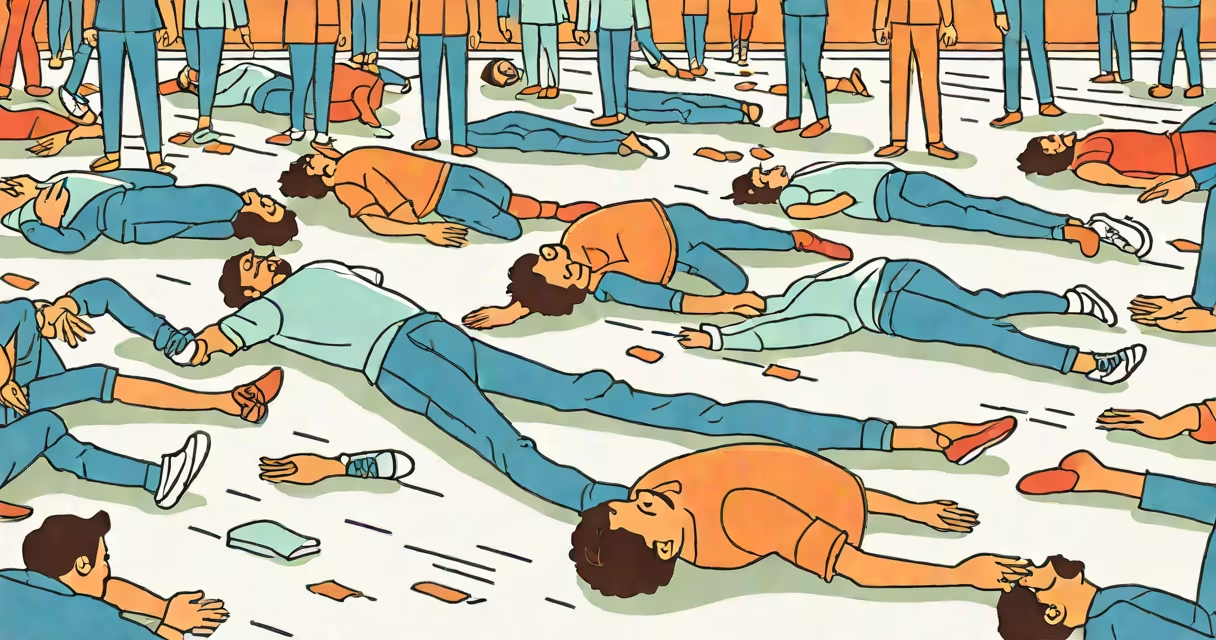
A person passes out when their brain temporarily loses oxygen due to reduced blood flow, typically caused by a sudden drop in blood pressure or heart rate. This condition, called syncope, affects about 3% of people annually.
The brain requires constant oxygen, delivered via blood. When blood flow slows for 6-8 seconds, unconsciousness occurs. The body usually restores circulation within 10-20 seconds, causing the person to wake up.
Common triggers include:
Less common causes include heart conditions, low blood sugar, or medication side effects.
| Type | Cause | Duration |
|---|---|---|
| Vasovagal | Emotional stress or pain | 5-20 seconds |
| Orthostatic | Standing too quickly | Seconds to minutes |
| Cardiac | Heart rhythm abnormalities | Minutes |
To reduce risks:
People who frequently faint should consult a doctor to rule out heart conditions.
Many believe fainting is always dangerous. While most cases are harmless, sudden fainting during activity may indicate serious conditions like arrhythmias. The American Heart Association recommends medical evaluation for recurrent syncope.
I once witnessed someone faint during a blood draw. The phlebotomist immediately laid them flat and elevated their legs, restoring circulation within seconds-a important response.