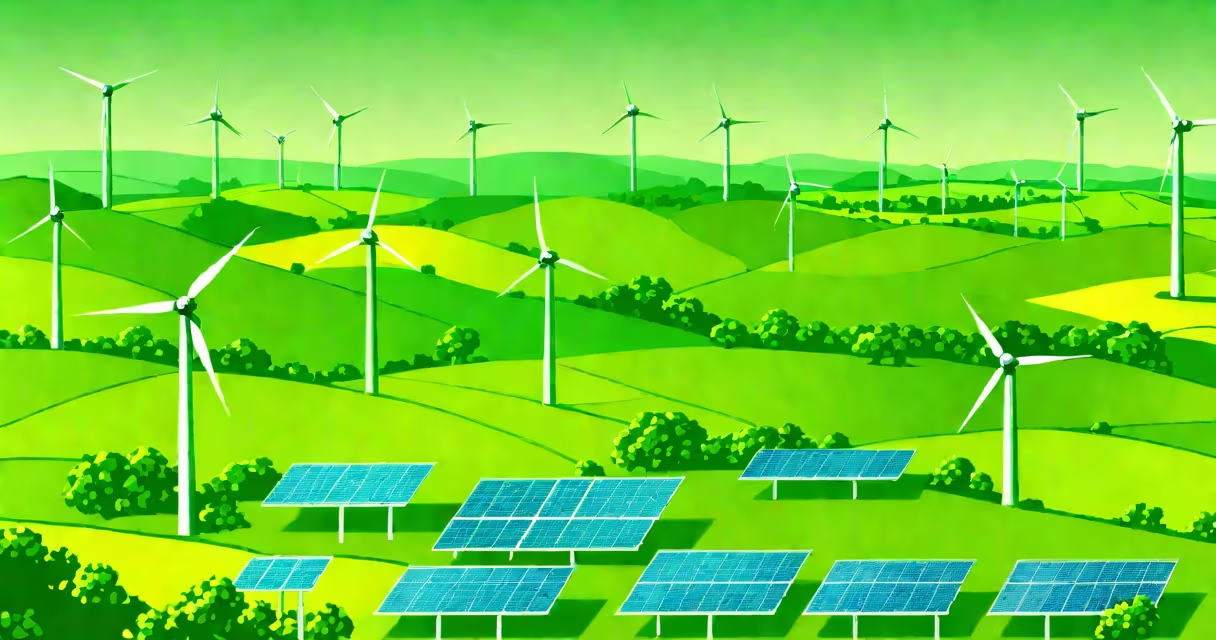
Renewable energy comes from natural sources that replenish faster than they're consumed, unlike fossil fuels. These sources include sunlight, wind, water, biomass, and geothermal heat.
Renewable energy harnesses natural processes to generate power. Solar panels convert sunlight into electricity, wind turbines change wind energy into mechanical power, and hydroelectric plants use flowing water to spin turbines. Unlike coal or gas plants, these systems produce little to no greenhouse gas emissions during operation.
| Type | Source | Global Capacity (2023) |
|---|---|---|
| Solar | Sunlight | 1,570 GW |
| Wind | Wind | 936 GW |
| Hydro | Water | 1,400 GW |
| Biomass | Organic Material | 154 GW |
| Geothermal | Earth's Heat | 16 GW |
Data from the International Renewable Energy Agency (IRENA) shows solar and wind leading global capacity, with hydroelectric power close behind. Biomass and geothermal make up smaller shares but still contribute to renewable energy portfolios worldwide.
Many people confuse renewable energy with being entirely emission-free. While renewable sources produce minimal emissions during operation, manufacturing and maintenance do create some pollution. For example, producing solar panels requires energy-intensive processes, and wind turbines need rare earth metals extracted through environmentally damaging mining practices.
Another misconception is that renewable energy is always reliable. Solar and wind depend on weather conditions, leading to variability in power generation. However, advancements in energy storage technologies, such as batteries, are helping mitigate this issue by storing excess energy for use when production is low.
Iceland generates nearly 100% of its electricity from renewable sources, primarily hydropower and geothermal energy. The country's unique geography allows it to use abundant geothermal resources, providing both electricity and heating for homes and businesses. This reliance on renewables has made Iceland a leader in sustainable energy practices.
Renewable energy is important for reducing greenhouse gas emissions and combating climate change. According to the U.S. Environmental Protection Agency (EPA), switching to renewable energy can decrease air pollution and improve public health., renewable energy sources are often more sustainable in the long term, as they do not deplete finite resources like fossil fuels.
As the world shifts towards cleaner energy solutions, understanding what means renewable becomes increasingly important. By embracing renewable energy, we can reduce our dependence on finite resources, lower carbon emissions, and create a more sustainable future for generations to come.