Lean manufacturing is a production method that maximizes efficiency by minimizing waste while meeting customer demand. It focuses on creating value through continuous improvement and eliminating non-value-added activities.
Lean manufacturing operates on five core principles: identify value, map the value stream, create flow, establish pull, and seek perfection. These principles help simplify processes, reduce lead times, and improve productivity. For example, a car manufacturer might use lean principles to eliminate unnecessary steps in assembling a vehicle, such as reducing the time spent moving parts between workstations.
Lean manufacturing targets seven types of waste (often remembered by the acronym TIMWOOD):
| Type of Waste | Description |
|---|---|
| Transport | Unnecessary movement of materials between workstations. |
| Inventory | Excess raw materials, work-in-progress, or finished goods. |
| Motion | Unnecessary movements by employees during their work. |
| Waiting | Idle time caused by imbalances in production or delays. |
| Overproduction | Producing more than what is needed by the customer. |
| Overprocessing | Adding unnecessary features or steps to a product. |
| Defects | Errors or flaws that require rework or scrap. |
Originally developed by Toyota, lean manufacturing is now used across various industries, including healthcare, construction, and software development. It's applied to improve efficiency, reduce costs, and improve quality. For instance, a hospital might use lean principles to simplify patient flow, reducing wait times and improving care delivery.
Many people confuse lean manufacturing with just-in-time (JIT) production, but JIT is a subset of lean focused on producing only what is needed, when it is needed. Another misconception is that lean manufacturing reduces workforce, but it actually aims to improve labor by eliminating non-value-added tasks. A study by the Lean Enterprise Institute found that companies implementing lean manufacturing see a 20-50% reduction in lead times and a 10-30% increase in productivity.
Consider a small bakery that wants to implement lean manufacturing. The bakery identifies value as producing fresh bread efficiently. By mapping the value stream, they find that excess inventory of flour and sugar leads to spoilage. They then create flow by ordering smaller quantities more frequently, establishing pull by baking only what customers order that day, and seeking perfection by continuously improving their baking process. This results in less waste, lower costs, and happier customers.
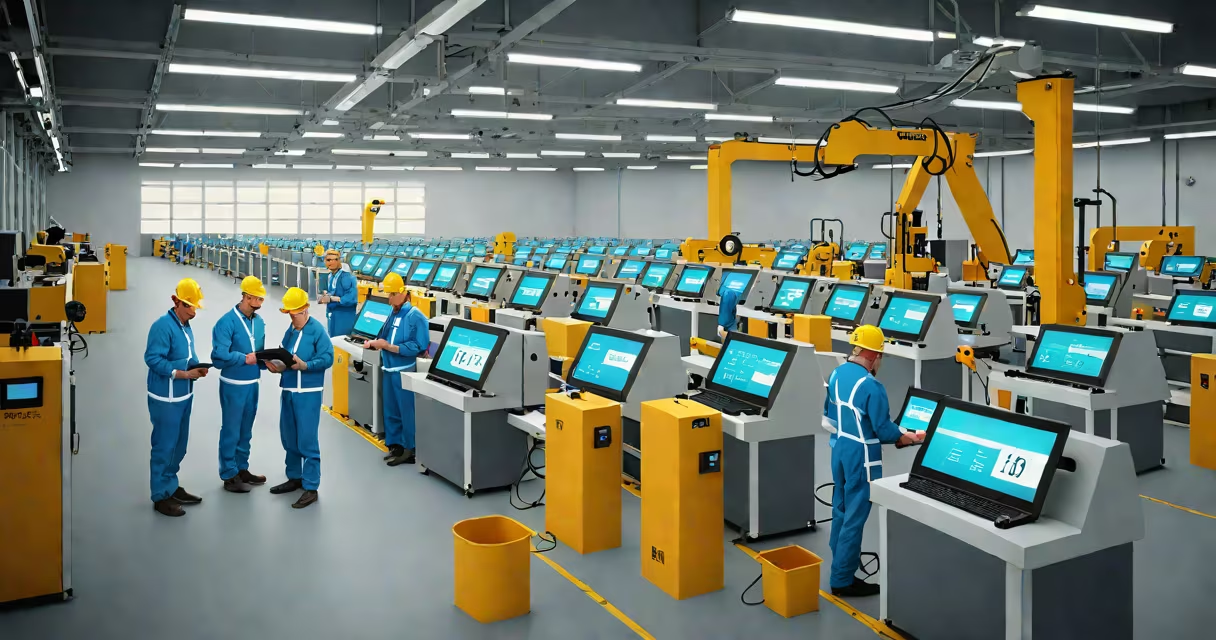
I once visited a factory that had implemented lean manufacturing principles. The most striking aspect was the clean, organized workspace with labeled storage areas. Workers used digital tablets to track production metrics in real-time, allowing them to quickly identify and address bottlenecks. This level of organization and efficiency is typical of successful lean implementations.
Lean manufacturing is not just about cutting costs; it's about creating value for customers through continuous improvement and waste reduction. By understanding and applying its principles, businesses can achieve significant gains in efficiency and quality.