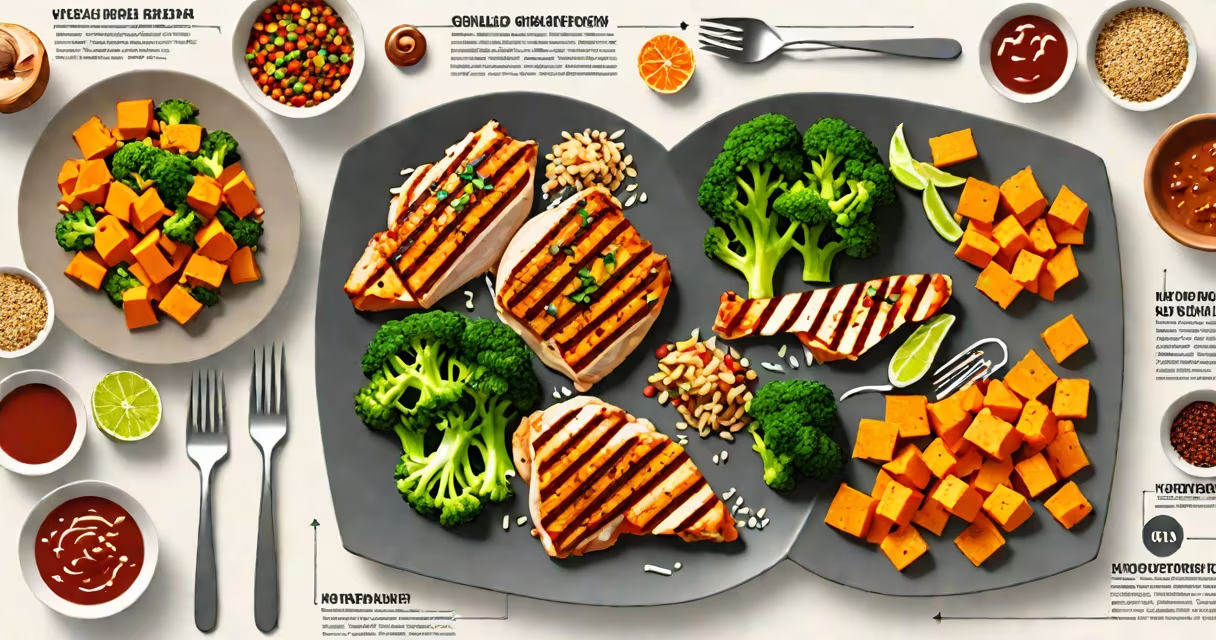
To build muscle, eat protein-rich foods like chicken, eggs, and Greek yogurt, along with complex carbs such as oats and sweet potatoes, and healthy fats like avocados and nuts. These nutrients support muscle repair, growth, and energy.
Muscles grow during recovery, not workouts. Protein provides amino acids to repair and build muscle fibers. Carbs replenish glycogen stores, and fats support hormone production, including testosterone, which aids muscle growth.
Focus on these three macronutrients:
| Meal | Food Examples |
|---|---|
| Breakfast | 3 eggs, 1 cup oats with berries, 1 tablespoon peanut butter |
| Snack | Greek yogurt with almonds and honey |
| Lunch | Grilled chicken breast, quinoa, steamed broccoli, avocado |
| Pre-Workout | Banana with almond butter |
| Post-Workout | Whey protein shake with a cup of mixed berries |
| Dinner | Lean beef, sweet potato, spinach salad with olive oil dressing |
| Before Bed | Cottage cheese with flaxseeds |
Many people overeat processed foods or rely too heavily on supplements. Whole foods provide essential vitamins and minerals that support muscle growth and health. Another mistake is undereating-muscle growth requires a caloric surplus, meaning you need to consume more calories than you burn.
Protein timing matters less than total daily intake. Spread protein intake evenly across meals to maximize muscle protein synthesis. Aim for 20-40 grams of protein per meal.
When I started my muscle-building process, I focused on eating lean proteins like chicken and fish, complex carbs like oats and sweet potatoes, and healthy fats like avocados and nuts. I noticed significant improvements in my strength and muscle definition within a few months. Tracking my meals and ensuring I hit my protein goals daily was key to my success.