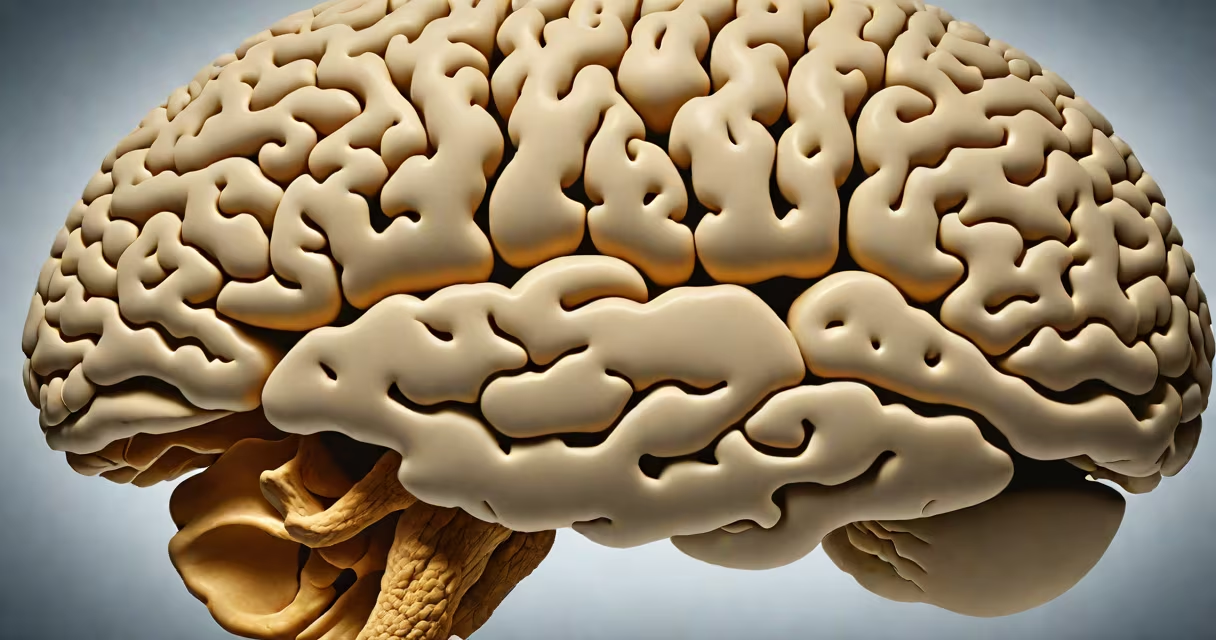
The amygdala is a small almond-shaped cluster of neurons located deep within the medial temporal lobe of the brain. This structure is important for processing emotions, particularly fear and pleasure.
The amygdala consists of several groups of nuclei, each with distinct functions. Despite its small size (about the size of an almond), it contains about 12 million neurons. It is part of the limbic system, which governs emotional responses and memory.
The amygdala is divided into multiple regions, including the basolateral complex, central nucleus, and cortical nucleus. These regions work together to process sensory input and trigger appropriate emotional responses.
The amygdala is located bilaterally, meaning there is one in each cerebral hemisphere. It sits near the hippocampus, which is involved in memory formation. The close proximity of these structures allows for efficient communication between emotion and memory processes.
To visualize its location, imagine a cross-section of the brain. The amygdala is nestled within the temporal lobe, near the inner curve of the brain. Its strategic position enables it to quickly receive and process sensory information from various parts of the brain.
The amygdala acts as the brain's alarm system. It rapidly detects threats and triggers the fight-or-flight response. This quick reaction is essential for survival, as it allows the body to respond to dangerous situations almost instantaneously.
Beyond fear, the amygdala also plays a role in other emotions, such as pleasure and social interactions. It helps regulate behaviors related to aggression, dominance, and sexual activity. Damage to the amygdala can lead to difficulties in recognizing facial expressions and understanding social cues.
One common misconception is that the amygdala is solely responsible for fear. While it is heavily involved in fear responses, it also contributes to positive emotions and social behaviors. Another myth is that the amygdala is a single, uniform structure. In reality, it consists of multiple interconnected nuclei, each with specialized functions.
Research has shown that the amygdala is not just a reactive structure but also plays a role in decision-making and emotional learning. It helps form emotional memories, which can influence future behavior and responses.
Consider a scenario where you hear a loud noise behind you. The amygdala quickly processes this auditory input and triggers a fear response, causing your heart rate to increase and your muscles to tense. This rapid reaction is thanks to the amygdala's efficient processing of sensory information and its direct connection to the body's stress response systems.