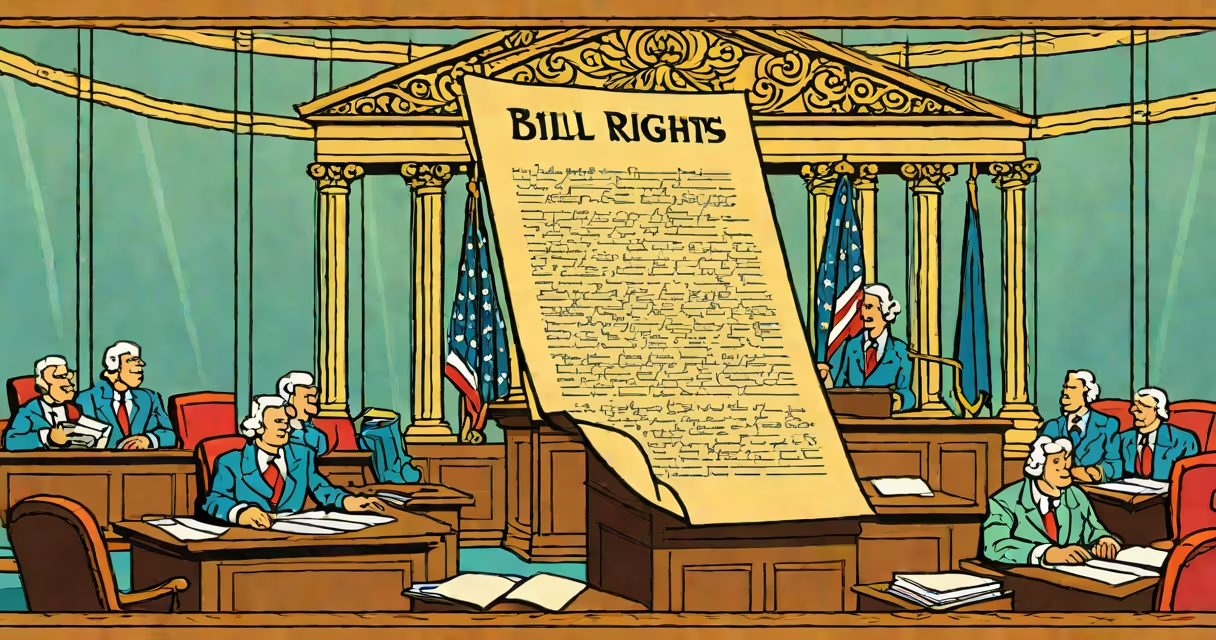
The Bill of Rights-the first ten amendments to the U.S. Constitution-is physically preserved in the National Archives in Washington, D.C. However, its legal authority applies nationwide as part of the U.S. Constitution.
The original Bill of Rights document is displayed in the National Archives' Rotunda for the Charters of Freedom alongside the Declaration of Independence and the Constitution. This secure facility maintains optimal temperature (67°F ± 1°F) and humidity (40% ± 5%) to preserve these fragile documents.
The Bill of Rights operates as a legal structure protecting individual liberties. These ten amendments were ratified in 1791 as a response to Anti-Federalist demands for greater constitutional protection of personal freedoms. The Supreme Court has since interpreted these amendments to apply to all states through a process called incorporation.
Many people confuse the physical location of the Bill of Rights with its legal application. While the original document resides in Washington, D.C., its protections extend to all citizens nationwide. Another misconception is that the Bill of Rights only protects individuals against federal actions. In reality, most of these protections now apply to state governments as well through a process called selective incorporation.
Consider the Third Amendment, which prohibits the forced quartering of soldiers in private homes during peacetime. While this might seem outdated, it was recently cited in a 2021 Supreme Court case (Caniglia v. Strom) regarding warrantless home searches. The Court referenced this amendment to reinforce the principle that homes are places of refuge, demonstrating how these centuries-old provisions remain relevant.
I once visited the National Archives and observed visitors studying the Bill of Rights through protective glass. Many took photos, but the most memorable moment was watching a group of students carefully reading the text and discussing its significance. This direct engagement with the document brought home its enduring importance in our legal system.