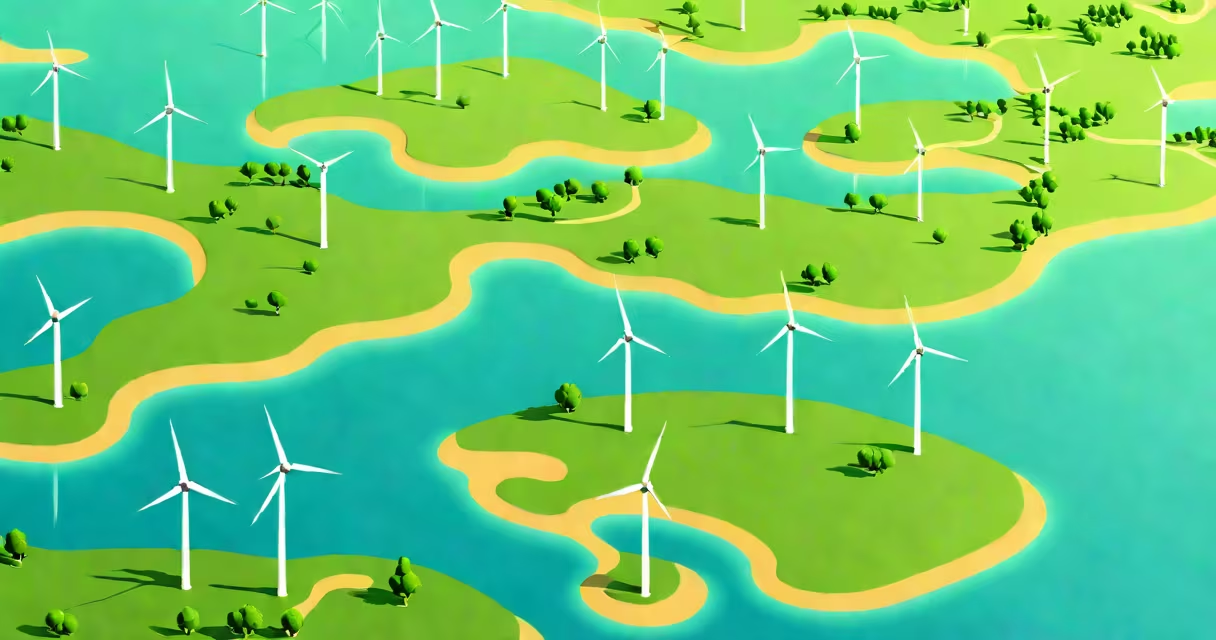
Wind energy is generated in locations with consistent wind speeds, primarily using turbines installed on land (onshore) or in bodies of water (offshore). These sites are chosen based on wind resource assessments that measure speed, direction, and consistency.
Wind turbines convert the kinetic energy of moving air into electricity. The turbine blades rotate when wind passes through them, driving a generator that produces electrical power. The amount of energy generated depends on wind speed cubed, meaning small increases in speed result in significant power gains.
Wind energy projects fall into two primary categories:
| Type | Location | Capacity | Example |
|---|---|---|---|
| Onshore | Land | Typically smaller | Texas, USA (largest onshore market) |
| Offshore | Ocean or sea | Larger capacity | North Sea, Europe (major offshore hub) |
Onshore installations are more common due to lower costs and easier access, while offshore sites often have higher wind speeds and less turbulence, leading to greater efficiency.
The United States leads in total wind energy capacity, followed by China and Germany. However, Denmark pioneered offshore wind farms and generates over 40% of its electricity from wind. Other key regions include:
Wind energy is particularly prominent in coastal areas, plains, and elevated regions where wind resources are abundant.
Many assume wind turbines are only effective in very windy areas, but modern turbines operate efficiently at lower speeds. For example, turbines in the Midwest U.S. generate significant power despite moderate average wind speeds. Another misconception is that wind farms require vast amounts of space; in reality, they occupy far less land per megawatt than fossil fuel plants.
Selecting optimal locations involves balancing wind resources with environmental and social factors. Offshore installations face higher construction costs but avoid land-use conflicts and often have higher capacity factors. Onshore sites must consider noise, visual impact, and wildlife effects, such as bird and bat collisions.
Understanding where wind energy is found helps stakeholders make informed decisions about renewable energy investments and infrastructure development. By using advanced technology and careful planning, wind energy continues to play a important role in the global transition to sustainable power sources.