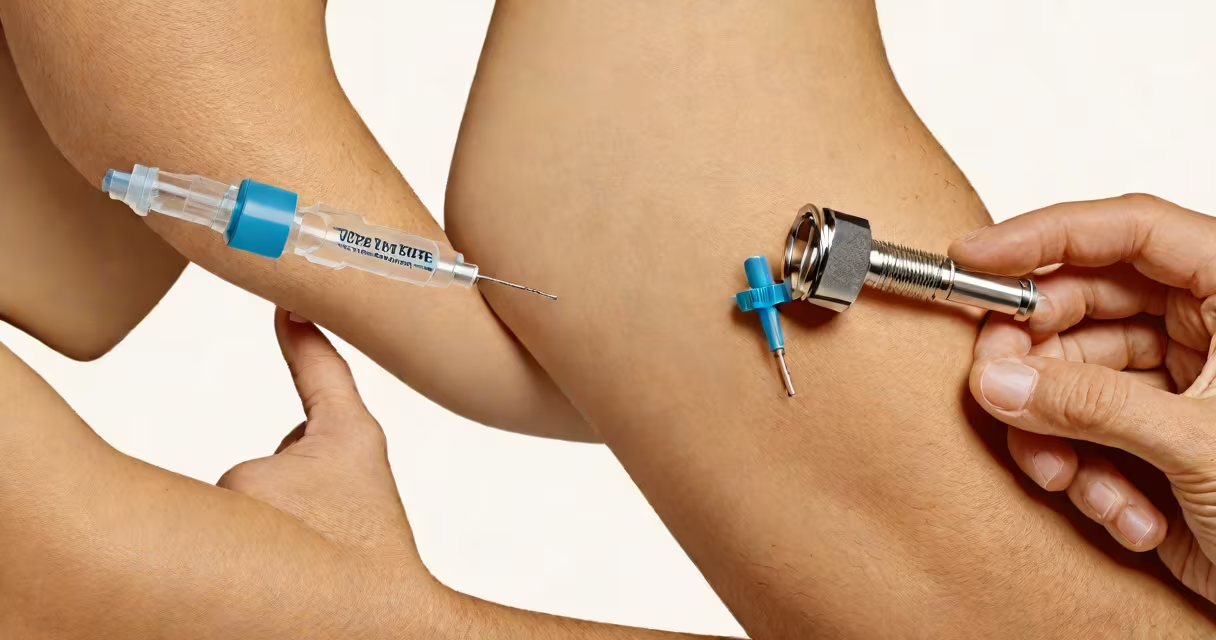
A tetanus injection should be administered in the deltoid muscle of the upper arm, specifically about 2-3 inches below the acromion process (the bony part of your shoulder). This location provides sufficient muscle mass while avoiding major blood vessels and nerves.
The deltoid muscle is ideal because it's well-developed in most adults and children over 2 years old. It's also easily accessible. The outer thigh is an alternative site for infants under 2 years old or anyone with limited arm mobility.
| Vaccine Type | Common Brand Names | Typical Dose Schedule |
|---|---|---|
| DTaP | Daptacel, Infanrix | 5 doses: 2, 4, 6, 15-18 months, 4-6 years |
| Tdap | Adacel, Boostrix | Single booster dose at 11-12 years, then every 10 years |
| Td | Tenivac | Every 10 years after initial series |
Many people confuse tetanus injections with other vaccines that go in different locations. For example, flu shots often go in the upper arm but slightly higher than tetanus shots. Another mistake is injecting too close to the shoulder joint, which can cause shoulder injuries.
For a standard adult dose (0.5 mL), use a 25-27 gauge needle that's at least 1 inch long. Clean the area with alcohol, stretch the skin taut, insert the needle at a 90-degree angle, and inject slowly. Aspiration (pulling back on the plunger) isn't necessary for tetanus shots.
I once observed a nurse administer a tetanus shot during a community health fair. She marked the injection site with a pen first, which helped ensure proper placement. This small step can prevent mistakes in busy clinical settings.
Seek medical attention if you experience severe pain, swelling, redness, or signs of infection at the injection site. An allergic reaction requiring immediate attention would include difficulty breathing, swelling of the face or throat, or a rapid heartbeat.
For more information on what can give you energy after feeling weak from illness, visit our guide on natural energy boosters.