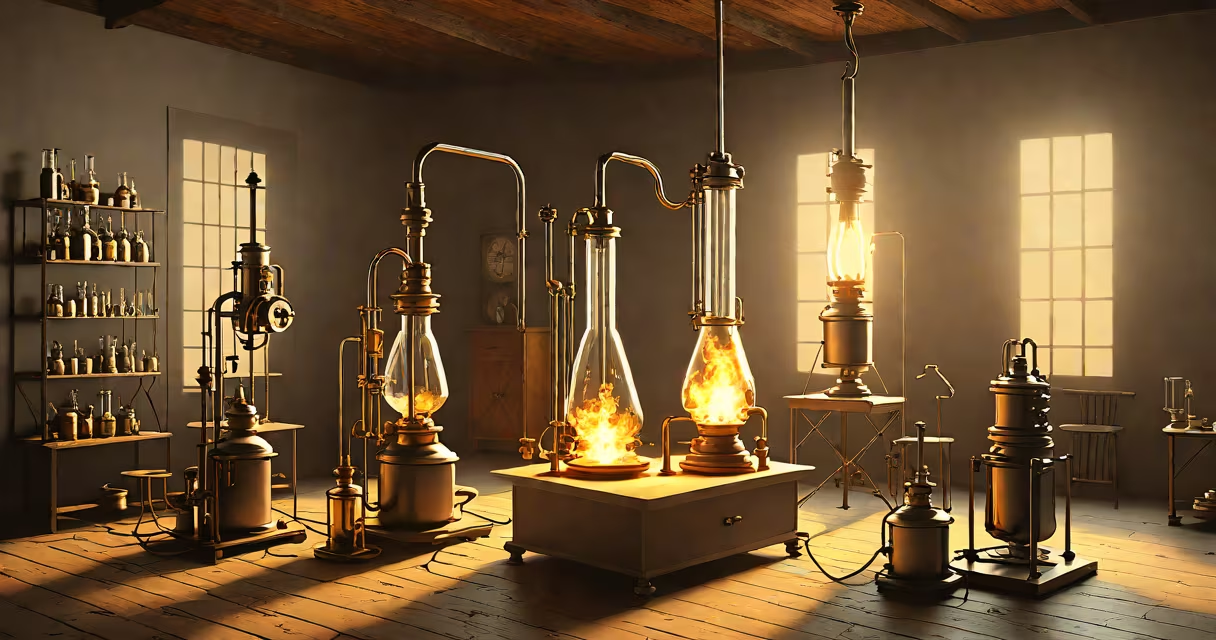
Thermal energy was first systematically studied by early scientists who developed concepts of heat transfer and temperature measurement during the 17th and 18th centuries. While no single individual "discovered" it, key figures advanced our understanding.
Before modern thermodynamics, people observed heat but didn't understand its nature. Ancient Greeks like Hero of Alexandria experimented with steam power, but the first scientific structure came later. In 1603, Italian scientist Galileo Galilei created a rudimentary air thermometer, though it measured temperature changes rather than absolute values.
The concept of heat as a form of energy emerged gradually. In 1662, English physicist Robert Boyle demonstrated that volume and pressure of gases were inversely proportional-a key insight for later thermal theories. French scientist Guillaume Amontons later linked temperature to pressure in gases, laying groundwork for absolute temperature scales.
| Scientist | Contribution | Year |
|---|---|---|
| Galileo Galilei | First thermometer design | 1603 |
| Robert Boyle | Gas laws connecting pressure and volume | 1662 |
| Guillaume Amontons | Temperature-pressure relationship in gases | 1702 |
| Daniel Gabriel Fahrenheit | Mercury thermometer and Fahrenheit scale | 1714 |
| Anders Celsius | Celsius temperature scale | 1742 |
Many assume the caloric theory-proposed in the late 18th century-was correct. This theory suggested heat was a fluid that moved between objects. While influential, it was proven wrong by James Prescott Joule and others in the 19th century. The caloric theory's persistence shows how challenging it was to understand thermal energy properly.
Another common mistake is crediting only one scientist with discovering thermal energy. In reality, progress came from many contributors over centuries. For example, while Daniel Gabriel Fahrenheit improved temperature measurement with his mercury thermometer in 1714, Anders Celsius later developed the scale still widely used today.
When I visited the Royal Society in London, I saw original instruments used by these pioneers. Holding Boyle's apparatus gave me a tangible connection to the experimental roots of thermal science. These tools were crude by modern standards, but they represented critical steps forward.
Understanding who contributed to thermal energy science helps contextualize current knowledge. The field evolved through collaboration and correction, not sudden breakthroughs. Recognizing these historical contributions underscores the importance of persistent scientific inquiry.