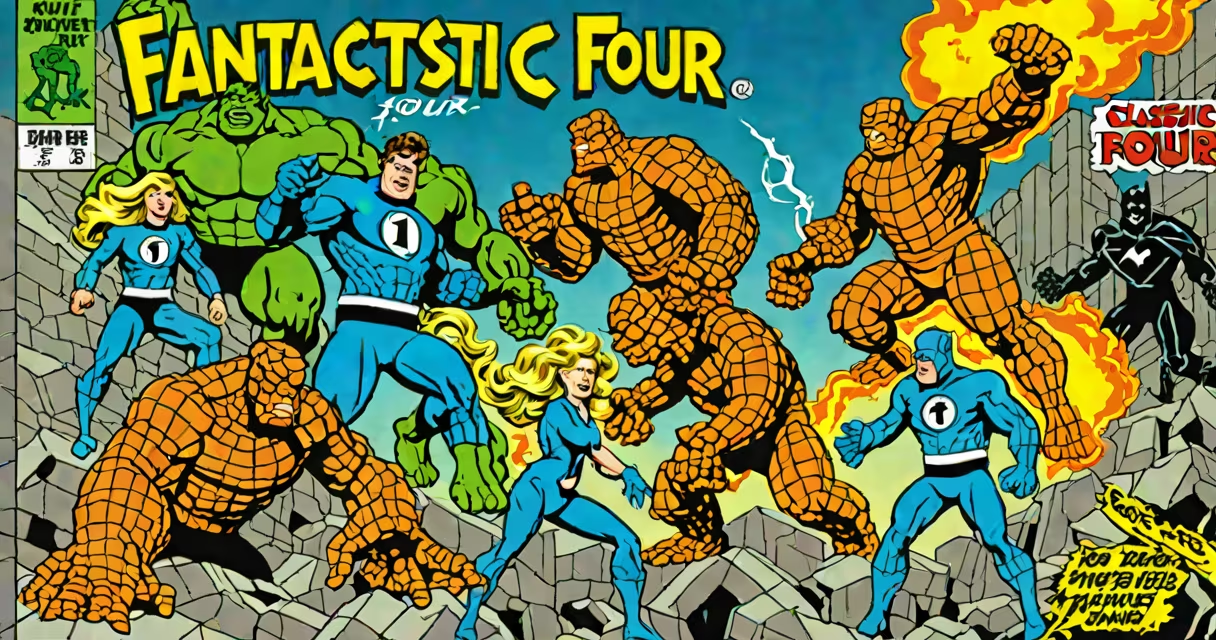
Marvel Comics was created by Martin Goodman in 1939 as Timely Comics, later rebranded as Marvel in the 1960s. The company transformed under key figures like Stan Lee, Jack Kirby, and Steve Ditko, who introduced iconic characters and revolutionary storytelling.
Martin Goodman launched Timely Comics in 1939, publishing pulp magazines and comic books. The company's early success included titles like Captain America Comics (1941), created by Joe Simon and Jack Kirby. However, it wasn't until the 1960s that Timely evolved into Marvel Comics under the leadership of Stan Lee, who became the company's editor and main writer.
The Marvel Universe as we know it was shaped by a core group of creators. Stan Lee served as the public face of Marvel, writing most of its major titles in the 1960s. Jack Kirby, known as the "King of Comics," co-created numerous characters with Lee, including the Fantastic Four, the X-Men, and the Avengers. Steve Ditko, another key figure, co-created Spider-Man and Doctor Strange with Lee.
| Creator | Notable Contributions |
|---|---|
| Stan Lee | Editor, writer; co-created Spider-Man, the X-Men, the Avengers, Iron Man, Thor, the Hulk, and more |
| Jack Kirby | Artist, co-creator; designed the visual styles of the Fantastic Four, the X-Men, and the Avengers |
| Steve Ditko | Artist, co-creator; developed Spider-Man, Doctor Strange, and the visual identity of many Marvel characters |
Marvel's creators introduced a new level of realism and relatability to superhero comics. Unlike the idealized heroes of rival DC Comics, Marvel's characters had flaws, insecurities, and personal struggles. This approach resonated with readers, particularly baby boomers, and helped establish Marvel as a dominant force in the industry.
For example, Spider-Man's alter ego, Peter Parker, was a high school student dealing with everyday problems like homework and bullies, to fighting crime. This grounded approach made the characters more relatable and contributed to Marvel's success.
Marvel's influence extends beyond comic books. The company's characters have appeared in animated series, live-action TV shows, films, and merchandise. The Marvel Cinematic Universe (MCU), launched in 2008 with Iron Man, has become one of the highest-grossing film franchises in history.
In my experience, visiting the original Marvel offices in New York City, now a historic landmark, provided a tangible connection to the creative energy that birthed these iconic characters. The modest space, filled with original artwork and memorabilia, underscored how a small group of visionaries changed pop culture forever.
Many people assume that Stan Lee single-handedly created Marvel's most famous characters. While Lee was instrumental in their development, he collaborated closely with artists like Jack Kirby and Steve Ditko. For instance, Jack Kirby's changing artwork and new designs were important in bringing characters like the Fantastic Four and the X-Men to life.
Another misconception is that Marvel's success was immediate. The company faced financial struggles in the 1950s and 1970s. It was the introduction of relatable, flawed heroes in the 1960s that turned the tide and established Marvel as a leader in the comic book industry.