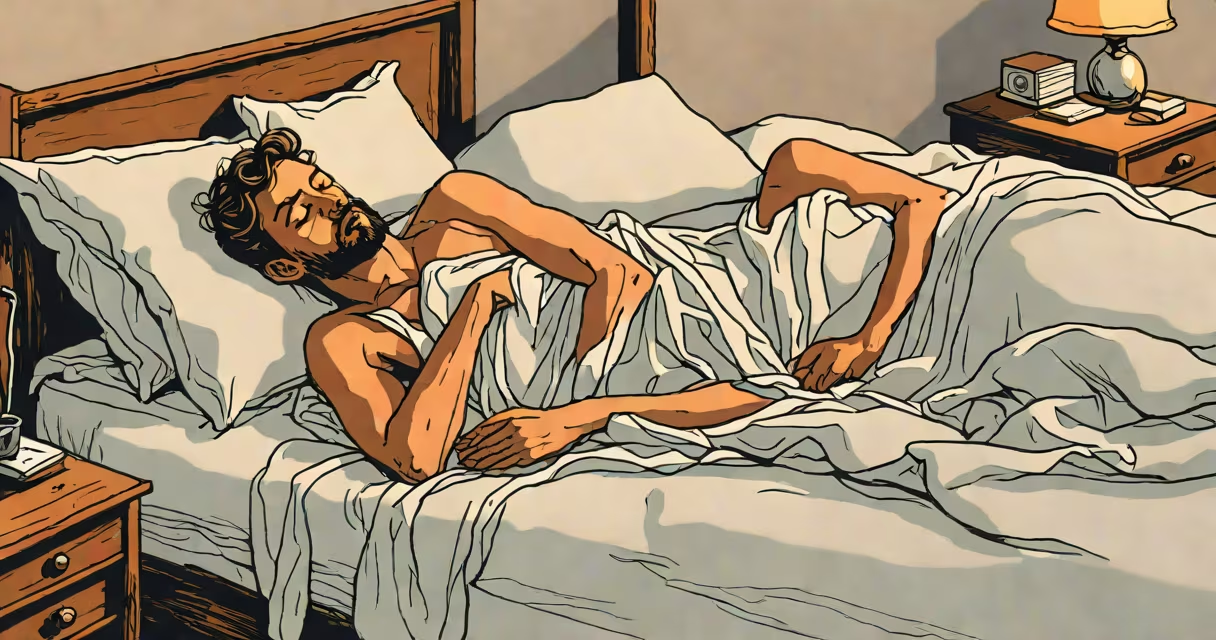
A person can't sleep due to physical or mental factors disrupting their ability to fall or stay asleep. Common causes include stress, poor sleep habits, and medical conditions.
Sleep occurs in cycles of non-rapid eye movement (NREM) and rapid eye movement (REM) stages. The body repairs tissues, consolidates memories, and releases hormones during NREM. REM sleep supports emotional health and creativity. Disruptions in these cycles lead to insomnia.
Sleep issues generally fall into three categories:
| Type | Description | Example |
|---|---|---|
| Acute insomnia | Short-term sleep difficulty triggered by stress or life events | Trouble sleeping after losing a job |
| Chronic insomnia | Long-term sleep problems lasting at least three months | Difficulty falling asleep for six months due to anxiety |
| On-and-off insomnia | Recurring sleep difficulties without a clear pattern | Sleeping poorly several nights a month |
Stress and anxiety are leading reasons why people struggle to sleep. The brain remains active when worried, making it hard to relax. Other causes include:
Many believe insomnia is simply not getting enough sleep. However, insomnia is a disorder characterized by difficulty falling or staying asleep despite adequate opportunity for rest. Another myth is that insomnia only affects older adults. While age increases risk, people of all ages experience it.
Improving sleep often requires addressing underlying causes. Cognitive behavioral therapy for insomnia (CBT-I) is a proven treatment. This therapy helps change thoughts and behaviors that interfere with sleep. Lifestyle changes, such as maintaining a consistent sleep schedule and creating a relaxing bedtime routine, also help.
I once struggled with sleep due to work-related stress. Establishing a bedtime routine, including reading and avoiding screens, improved my sleep quality within weeks. Consulting a doctor ruled out medical conditions and confirmed stress as the primary cause.