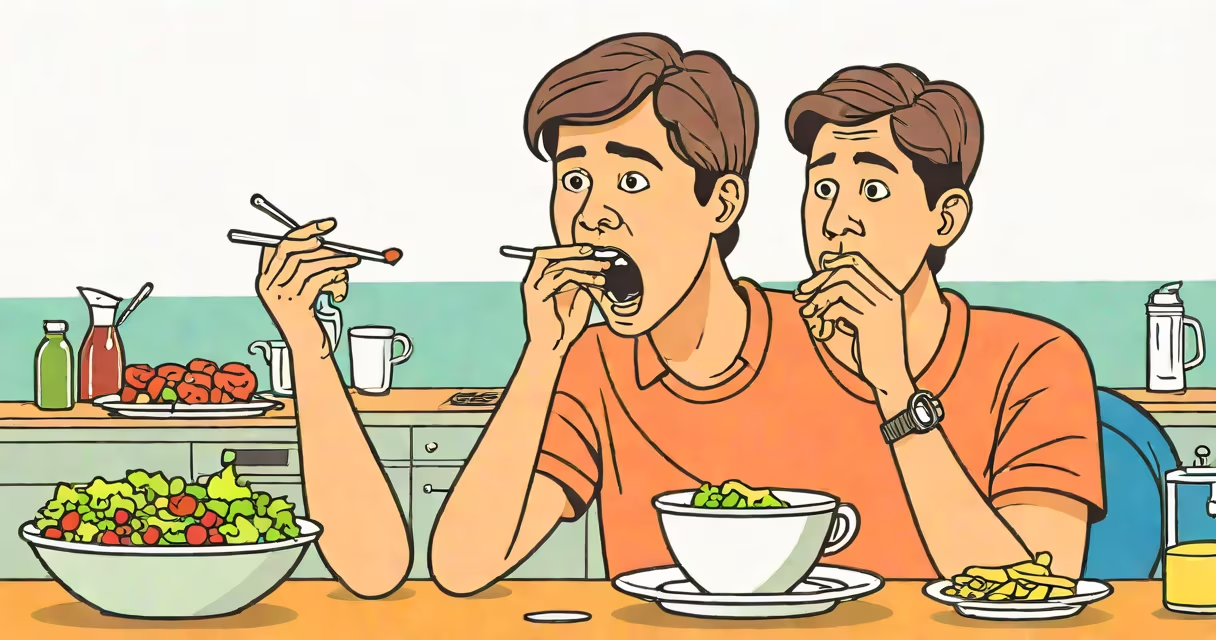
Hiccups triggered by eating occur when food irritates the diaphragm, causing sudden involuntary contractions. This common but often misunderstood reaction stems from digestive or nervous system interactions.
The diaphragm, a muscle separating your chest and abdomen, contracts abruptly during hiccups. This forces air through your vocal cords, producing the "hic" sound. Eating can trigger this reflex due to:
These contractions typically last seconds to hours. Chronic cases exceeding 48 hours warrant medical attention.
Several factors link eating to hiccups:
| Cause | Mechanism | Example |
|---|---|---|
| Eating too quickly | Air swallowed irritates the esophagus | A busy professional scarfing lunch at their desk |
| Spicy or acidic foods | Stomach irritation triggers nerve responses | Someone eating hot wings |
| Carbonated drinks | Gas expands the stomach | A teenager drinking soda through a straw |
| Alcohol consumption | Relaxes the esophageal sphincter | An adult having wine with dinner |
Many believe hiccups are harmless. However, persistent cases may indicate gastroesophageal reflux disease (GERD) or other conditions. A 2016 study in American Journal of Gastroenterology found 10% of chronic hiccup cases had underlying medical causes.
Another myth suggests scaring someone stops hiccups. While distraction might help, it doesn't address the root cause. Effective remedies include:
Consult a doctor if hiccups:
Underlying conditions like GERD or hiatal hernia may require treatment. Medications or surgical interventions can help in severe cases.
I once experienced persistent hiccups after eating spicy Thai food. The sensation lasted over an hour despite drinking water and holding my breath. The experience motivated me to research better eating habits and identify trigger foods.