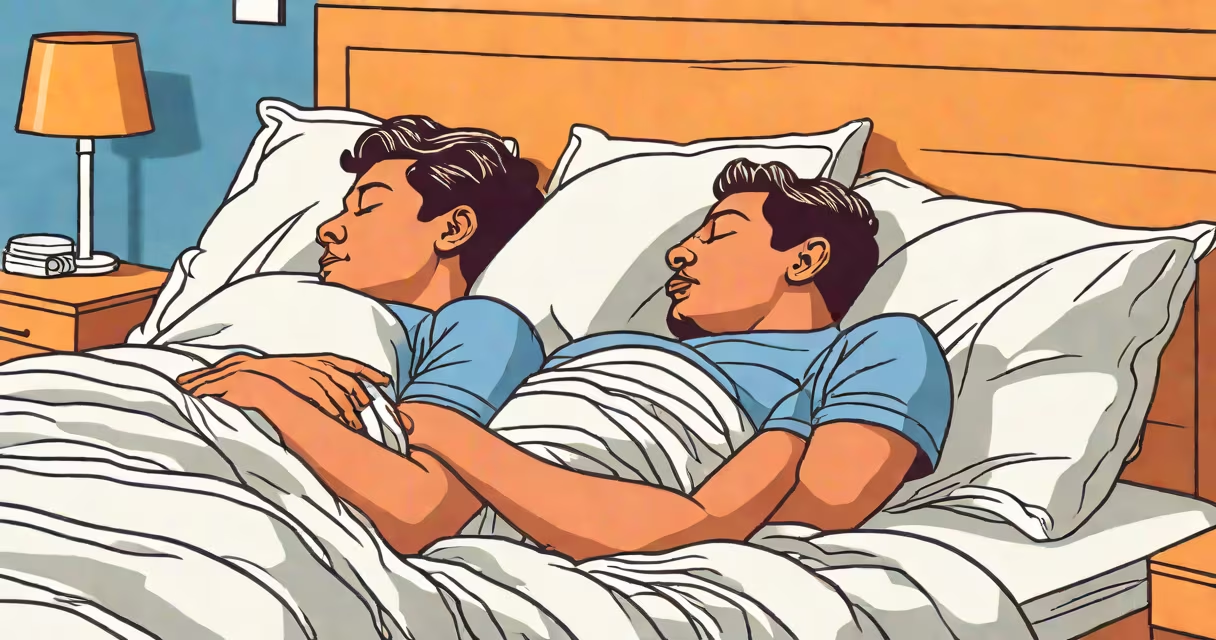
Sleep noises occur due to vibrations in your airway during breathing. These sounds range from soft hums to loud snores, depending on airflow obstruction.
When muscles relax during sleep, they can narrow your airway. Air rushing through this smaller space creates vibrations, producing sounds. The louder the noise, the narrower the airway passage.
| Type | Cause | Typical Sound |
|---|---|---|
| Snoring | Partial airway obstruction | Loud, rhythmic rumbling |
| Sleep talking | Brain activity during REM sleep | Mumbling or clear speech |
| Grinding (bruxism) | Stress or misaligned teeth | Gritting or clicking sounds |
Most sleep noises result from temporary airway restrictions. Common triggers include:
Occasional sleep noises are normal, but frequent loud snoring may indicate sleep apnea. This serious condition causes pauses in breathing during sleep. The American Academy of Sleep Medicine recommends consulting a doctor if:
Untreated sleep apnea increases risks for heart disease, diabetes, and high blood pressure.
Simple lifestyle changes often help. I noticed significant improvement when I stopped drinking alcohol before bed and started sleeping on my side instead of my back. Other effective strategies include:
For persistent issues, doctors may recommend a continuous positive airway pressure (CPAP) machine, which keeps airways open during sleep.