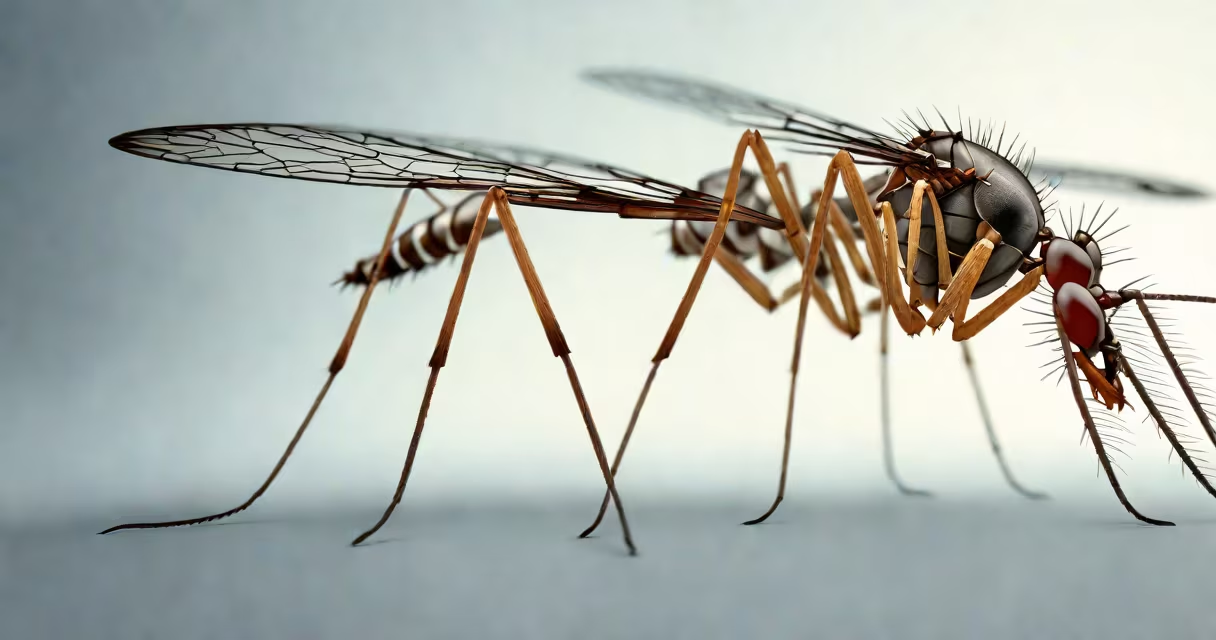
Mosquitoes are attracted to light because their eyes are drawn to contrasting light levels, especially ultraviolet (UV) wavelengths. This behavior helps them go through toward potential hosts at dawn and dusk.
Mosquitoes have compound eyes with thousands of individual lenses called ommatidia. These eyes are particularly sensitive to UV light, which makes artificial lights like incandescent bulbs and LEDs highly visible to them. When mosquitoes see light against a dark background, they interpret it as a potential resting or feeding area.
Not all light sources attract mosquitoes equally. Here's how different light types compare:
| Light Type | Attraction Level | Example Sources |
|---|---|---|
| Ultraviolet (UV) | High | Blacklights, LED bulbs |
| Incandescent | Moderate | Traditional light bulbs |
| Fluorescent | Low | Office lighting, fluorescent tubes |
| Infrared | None | Heat lamps, night vision |
This variation explains why some outdoor lights draw more mosquitoes than others. For instance, a blacklight will attract far more mosquitoes than a standard fluorescent bulb.
Mosquitoes use light as a navigational tool, particularly during low-light conditions like dawn and dusk. They rely on contrasting light levels to find resting places and potential hosts. Artificial lights disrupt their natural navigation, causing them to gather around these sources.
Research from the Journal of Medical Entomology confirms that mosquitoes are more active near light sources because they mistake them for natural light cues. This behavior is especially pronounced in species like Aedes aegypti, which are known to bite humans.
Many people assume that mosquitoes are attracted to light because they feed on it, but this is incorrect. Mosquitoes don't eat light-they use it for orientation. Another myth is that mosquitoes prefer bright lights over dim ones, but the truth is they're drawn to contrast, not brightness.
For example, a dim porch light against a dark background will attract more mosquitoes than a bright light in a well-lit area. This is why outdoor lighting strategies often involve reducing contrast to minimize mosquito attraction.
To minimize mosquito attraction to light, use yellow or sodium vapor lights, which emit less UV light. These bulbs are less appealing to mosquitoes while still providing sufficient illumination., installing fans near seating areas can help disperse mosquitoes, as they are weak fliers.
I tested this firsthand during a summer camping trip. By switching from a bright white LED lantern to a yellow bug light, I noticed fewer mosquitoes around the campsite. Pairing this with a battery-operated fan made the difference even more noticeable.