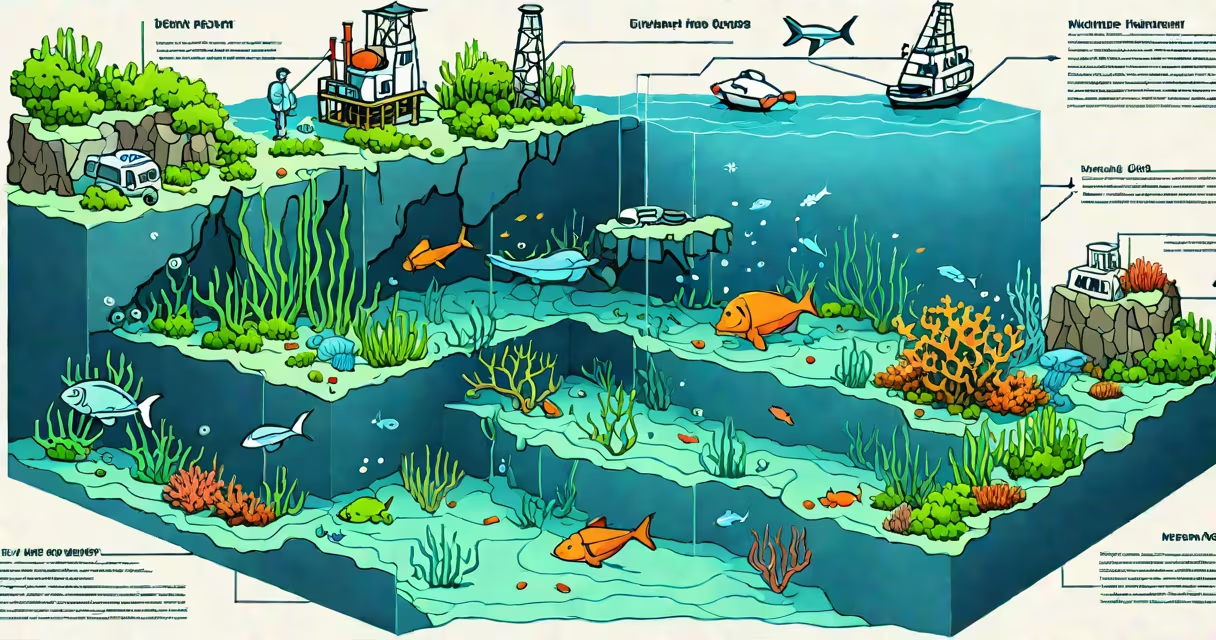
Marine biology is the study of ocean life and ecosystems, offering careers in research, conservation, and education. Professionals in this field explore marine organisms, their habitats, and the impacts of human activity on ocean health.
Marine biologists conduct fieldwork and lab research to understand marine life. They study species interactions, ocean chemistry, and environmental changes. Techniques include scuba diving, remote sensing, and genetic analysis. For example, researchers track whale migrations using satellite tags to study their behavior and habitat use.
Marine biology careers span various specializations:
| Field | Description | Example Jobs |
|---|---|---|
| Research | Study marine life and ecosystems | Marine Researcher, Oceanographer |
| Conservation | Protect marine environments | Marine Conservationist, Wildlife Biologist |
| Education | Teach about marine science | Marine Science Professor, Educator |
| Policy | Develop regulations for ocean use | Environmental Policy Analyst |
According to the Bureau of Labor Statistics, marine biologists earn a median salary of $63,000 annually, with higher pay for specialized roles in research and conservation.
Many assume marine biology is solely about working with charismatic species like dolphins or whales. However, the field includes studying microscopic plankton, deep-sea vents, and even pollution impacts. For instance, marine microbiologists research bacteria that break down oil spills, playing a important role in environmental cleanup.
Marine biology is applied globally to address environmental challenges. For example, marine biologists in Florida monitor coral reefs to assess bleaching events caused by climate change. Their findings inform conservation strategies and policy decisions., marine biologists work in aquariums, government agencies, and private industries, contributing to sustainable fishing practices and offshore energy development.
Marine biology offers diverse career paths for those passionate about ocean science and conservation. Whether conducting research, protecting endangered species, or educating the public, marine biologists play a important role in understanding and preserving our oceans.