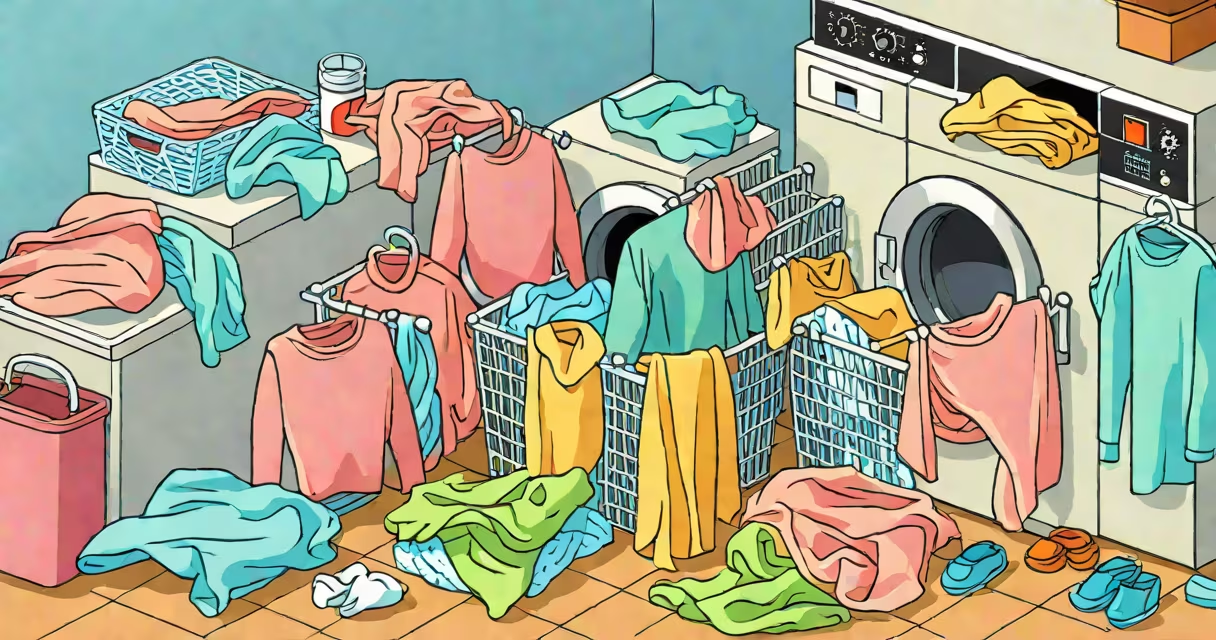
Your clean laundry smells bad because bacteria, mold, or mildew grew in your washing machine or on clothes left damp too long. These microbes thrive in moist environments, creating foul odors even after a wash cycle.
When clothes stay wet for more than 30 minutes, microorganisms start feeding on organic matter like sweat, soap residue, or food particles. They multiply rapidly in the warm, dark environment of your washing machine, producing the rotten smell you notice later.
The most common reasons for stinky laundry include:
Many people assume that hot water kills all bacteria, but some odor-causing microbes survive high temperatures. Others think that using more detergent cleans better, but excess soap actually contributes to the problem by leaving residues that feed bacteria.
To eliminate laundry odors:
According to the American Cleaning Institute, proper washing machine maintenance reduces bacterial growth by up to 90%. The University of Arizona found that washing machines can harbor more bacteria than toilet seats, emphasizing the need for regular cleaning.
To keep your laundry smelling fresh:
| Tip | Implementation |
|---|---|
| Regular cleaning | Monthly deep cleaning with vinegar or specialized cleaning products |
| Proper loading | Follow manufacturer guidelines for load size |
| Rinse cycles | Add an extra rinse cycle when using heavy detergents |
| Machine maintenance | Check and clean hoses, gaskets, and detergent drawers regularly |
By understanding and addressing the root causes, you can eliminate unpleasant laundry odors and maintain fresh-smelling clothes. Regular maintenance and proper washing practices make all the difference in keeping your laundry smelling clean.