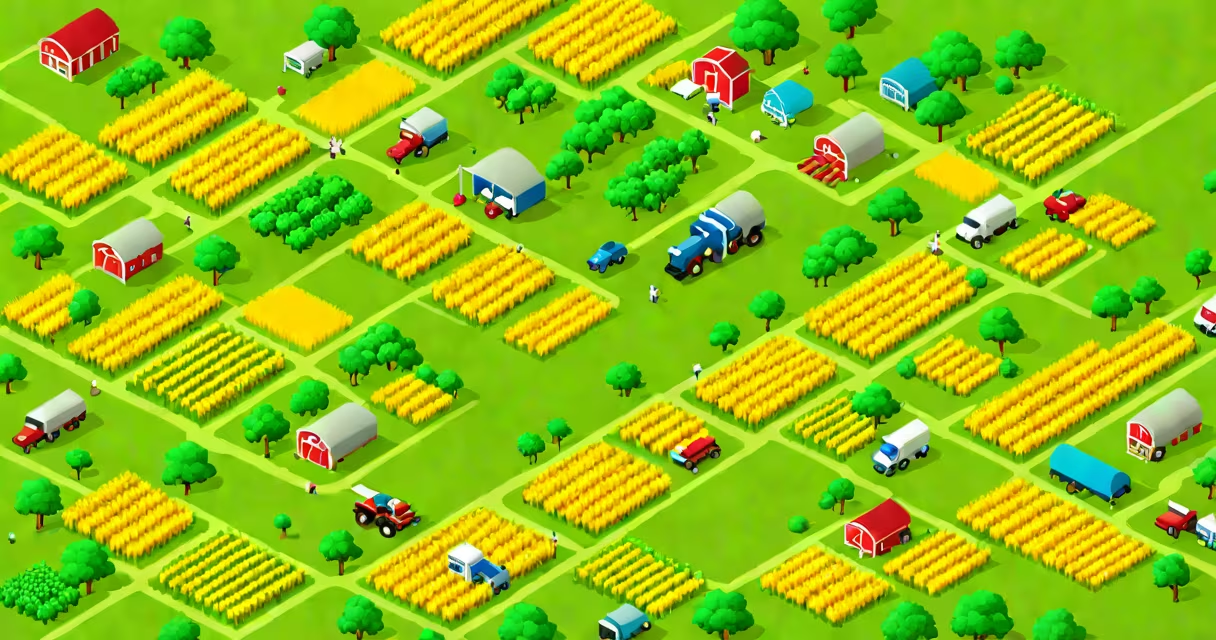
Agribusiness definition geography examines how large-scale farming, food processing, and distribution systems operate across regions, integrating agricultural production with commercial activities. This field studies the spatial organization of agribusiness operations, analyzing how factors like climate, infrastructure, and policy shape global food systems.
Agribusiness combines primary agricultural production with secondary activities like processing, packaging, and distribution. Unlike traditional farming, which focuses solely on crop or livestock production, agribusiness integrates multiple stages of the supply chain. For example, a company might grow soybeans, process them into animal feed, and distribute the feed to livestock farms.
The geography of agribusiness influences efficiency and profitability. Proximity to markets, transportation networks, and natural resources determines where agribusinesses establish operations. For instance, Brazil's vast soybean fields supply Chinese animal feed manufacturers due to favorable trade routes and competitive production costs.
| Type | Description | Example |
|---|---|---|
| Input Supply | Provides tools, seeds, and fertilizers to farmers | John Deere selling tractors to U.S. wheat farmers |
| Production Agriculture | Large-scale farming of crops or livestock | Cargill's soybean farms in Argentina |
| Processing | Transforms raw agricultural products into consumable goods | Nestlé turning milk into chocolate in Switzerland |
| Distribution | Delivers processed goods to consumers | Walmart transporting groceries to retail stores |
Agribusiness thrives in regions with fertile land, water access, and favorable climates. The U.S. Midwest, Brazil's Cerrado, and India's Punjab are major hubs. However, agribusiness also relies on urban centers for processing and distribution. For example, Chicago's meatpacking industry processes livestock from surrounding states.
Globalization has expanded agribusiness beyond national borders. Companies source inputs from one country, process goods in another, and sell to international markets. This interconnected system ensures year-round supply and competitive pricing. For instance, New Zealand exports dairy products globally, while the Netherlands dominates flower production.
Agribusiness drives economic growth by creating jobs and stimulating related industries. According to the Food and Agriculture Organization (FAO), agribusiness accounts for 4% of global GDP. It also addresses food security by increasing production efficiency and reducing waste.
However, agribusiness faces challenges like environmental degradation and resource depletion. Sustainable practices, such as precision farming and organic methods, mitigate these issues. For example, UNEP reports that regenerative agriculture can restore degraded soils while maintaining productivity.
Many confuse agribusiness with traditional farming, overlooking its commercial aspects. While farming focuses on growing crops or raising livestock, agribusiness encompasses the entire supply chain, including marketing and sales. For instance, a family-owned farm selling produce at a local market operates as a small-scale farmer, whereas a corporation exporting globally functions as an agribusiness.
I visited an almond orchard in California's Central Valley, a prime agribusiness region. The farm used advanced irrigation systems and employed seasonal workers for harvest. Nearby processing plants shelled and packaged the nuts for export. This system demonstrates how agribusiness integrates production, labor, and logistics to serve global markets.
Understanding agribusiness definition geography reveals how food production systems operate on a global scale. By analyzing spatial patterns and supply chains, businesses and policymakers can improve efficiency and sustainability in food systems.