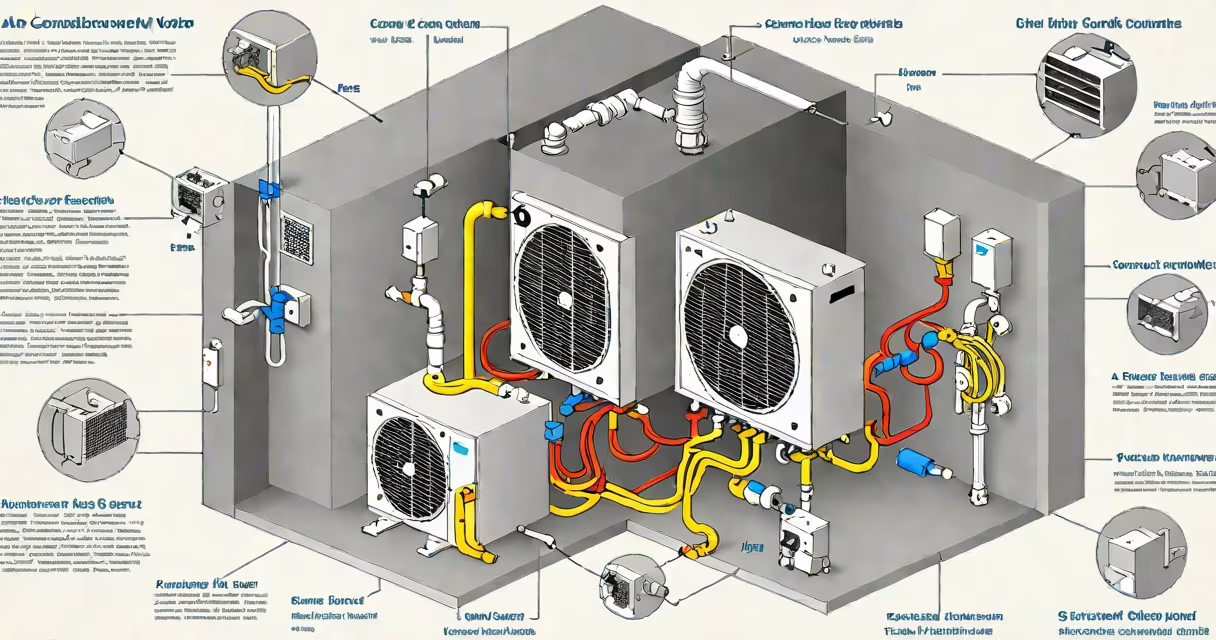
An air conditioner cools indoor spaces by removing heat and humidity through a refrigeration cycle. The system uses chemicals that change to absorb and release heat.
The basic principle behind air conditioners is heat transfer. The system contains a refrigerant that circulates through coils, changing from low-pressure gas to high-pressure liquid. As warm air flows over the evaporator coil, the refrigerant inside absorbs heat, turning. This cooled air is then circulated back into the room.
Every air conditioning unit consists of four primary parts:
| Type | Description | Best For |
|---|---|---|
| Window Units | Self-contained units installed in a window frame. | Small rooms or apartments. |
| Split Systems | Consist of an outdoor compressor/condenser and an indoor air handler. | Single rooms or small homes. |
| Central Air Conditioners | Use ducts to distribute cool air throughout the entire house. | Large homes with existing ductwork. |
Many people believe air conditioners simply blow cold air. However, they actually remove heat and humidity from the indoor environment. The cooling process involves both reducing temperature and controlling moisture levels.
Another misconception is that air conditioners create cool air. In reality, they transfer heat, making the indoor space cooler. This process is similar to how a refrigerator keeps food cold by removing heat from its interior.
If your air conditioner stops working, check the power supply and ensure the thermostat is set correctly. Clean or replace filters regularly to maintain efficiency. For persistent issues, consult a professional technician.
Understanding how an air conditioner works helps in maintaining and troubleshooting the system effectively. Regular maintenance ensures optimal performance and energy efficiency.