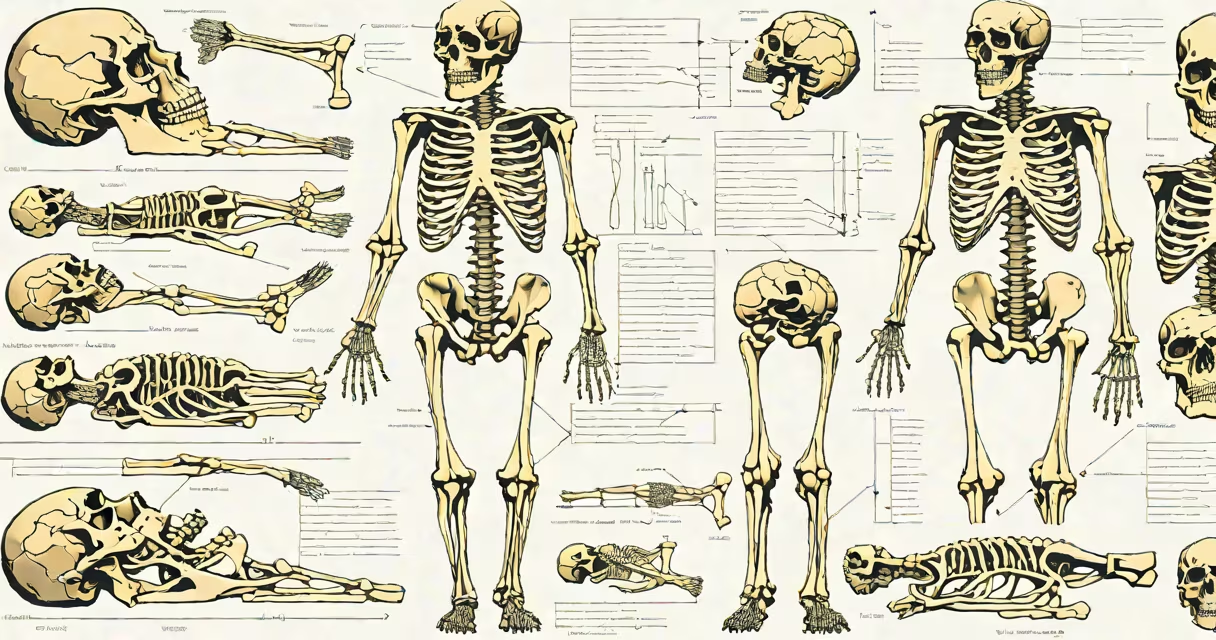
All the bones in our body form the skeletal system, a structure of 206 interconnected bones in adults that support movement, protect organs, and produce blood cells. This count varies slightly by person due to small bones like sesamoids that can differ.
The adult human skeleton consists of 206 bones, though newborns have around 270. The difference comes from bones fusing together as we grow. For example, the skull's many plates fuse into a single structure.
Bones come in four primary types:
| Type | Characteristics | Examples |
|---|---|---|
| Long bones | Longer than wide, with a shaft and two expanded ends | Femur, tibia, humerus |
| Short bones | Cube-shaped, nearly equal in length and width | Wrist and ankle bones |
| Flat bones | Thin, flattened, and often curved | Skull, sternum, ribs |
| Irregular bones | Complex shapes that don't fit other categories | Vertebrae, hip bones |
The skeletal system serves several critical functions beyond mere structure:
Many people assume all bones are hard and unchanging. In reality, bones constantly remodel through a process where old bone tissue is replaced by new. This allows bones to heal after fractures and adapt to stress, such as when athletes' bones strengthen from repeated use.
Another myth is that bone density peaks in early adulthood and declines steadily. While density does decrease with age, bones can still gain strength through weight-bearing exercise and proper nutrition.
I remember my first anatomy lab vividly. Seeing the actual femur and ribcage made the textbook illustrations come to life. The complexity of the skeletal system became apparent as I traced the connections between bones and understood how they work together.