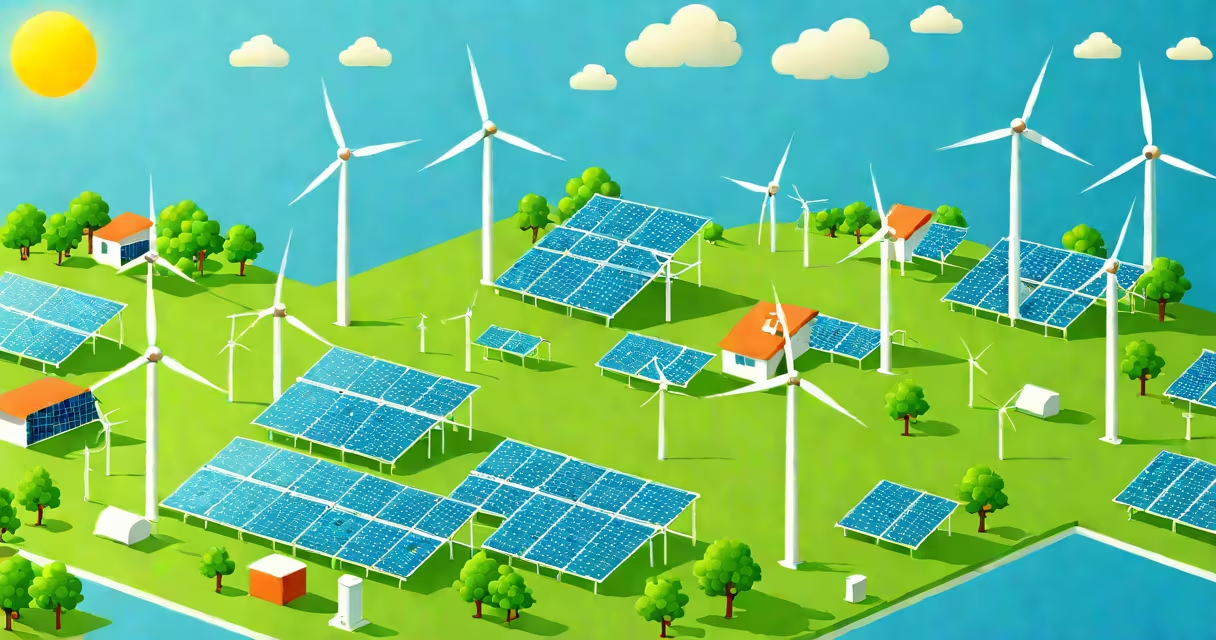
Alternative energy resources are renewable power sources like solar, wind, and hydro that replace fossil fuels. These clean energy options reduce carbon emissions and environmental harm.
Unlike finite fossil fuels, alternative energy harnesses natural processes. Solar panels convert sunlight into electricity, while wind turbines use moving air currents. Hydropower relies on flowing water, and geothermal taps into Earth's heat.
| Type | Source | Key Benefit |
|---|---|---|
| Solar | Sunlight | Abundant and scalable |
| Wind | Air currents | Low operational costs |
| Hydropower | Water flow | High efficiency |
| Geothermal | Earth's heat | Constant availability |
| Biomass | Organic material | Waste reduction |
Countries like Germany and Denmark lead in adopting alternative energy. Solar farms in California and offshore wind turbines in the UK show large-scale applications. These resources cut pollution, create jobs, and improve energy security.
Many assume alternative energy is unreliable. However, advancements in battery storage solve intermittency issues. Another myth is high costs, but prices for solar and wind have dropped over 80% since 2010 (source: IRENA).
Iceland generates 100% of its electricity from renewable sources, mostly hydropower and geothermal. This eliminates fossil fuel dependence and reduces greenhouse gas emissions (ThinkGeoEnergy).