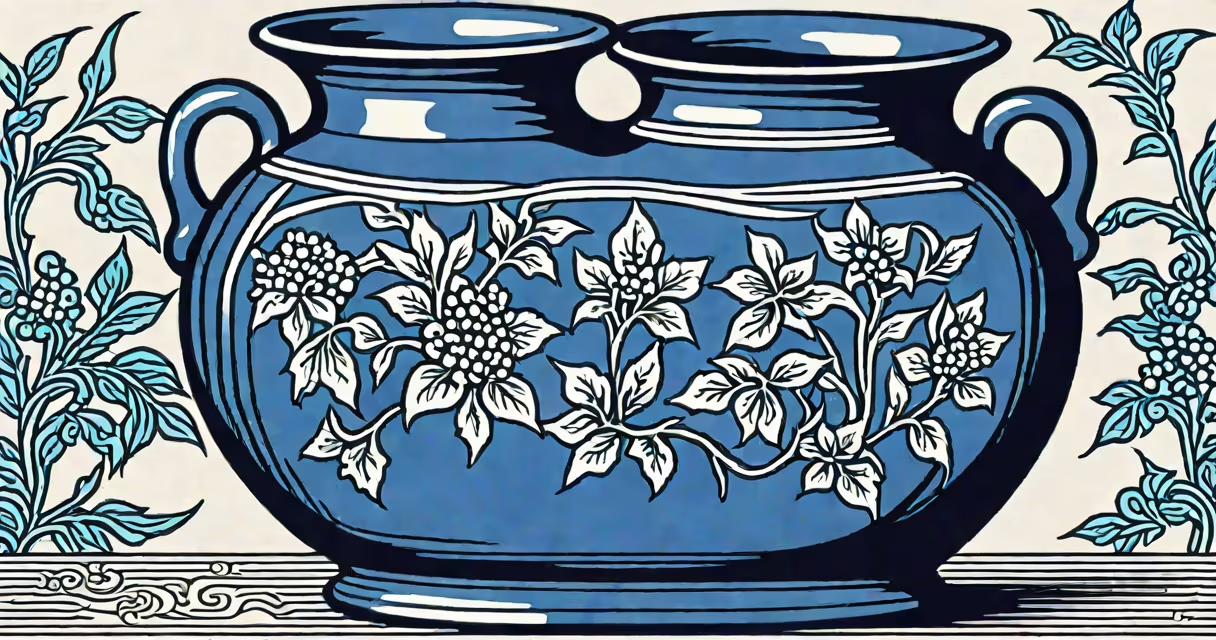
Blue Mountain Pottery is a distinctive style of American stoneware known for its deep cobalt blue glazes and organic forms, created primarily in the mid-20th century. This functional art emerged from the Craft Pottery Movement, blending traditional techniques with modern aesthetics.
The style originated in the Blue Ridge Mountains region, particularly around Asheville, North Carolina. Potters like Jacques Busse and the Oleaks used local stoneware clay and developed signature glazes that turned green in the kiln but appeared blue under natural light. Pieces often feature:
Potters threw pieces on wheels or shaped them by hand, then applied glazes using brushes or dipping methods. The signature blue-green color came from copper carbonate mixed with other minerals. A single piece could take weeks to complete, including drying, firing, and glazing stages.
Unlike mass-produced ceramics, each Blue Mountain Pottery item was unique. The potters' marks varied - some used initials, others incorporated nature motifs. This individuality makes authentication challenging today.
Many confuse Blue Mountain Pottery with other blue-glazed wares:
| Type | Origin | Glaze Color | Typical Forms |
|---|---|---|---|
| Blue Mountain | Appalachian US | Blue-green | Organic jugs, vases |
| Delftware | Netherlands | Bright blue | Tin-glazed tiles |
| Willow Pattern | England | Blue on white | Transfer-printed plates |
Authentic pieces require careful handling - the crackled glazes are prone to chipping. The Pottery Collectors of America note that well-preserved examples sell for $500-$5,000 at auction, with rare pieces exceeding $10,000. Museums like the Smithsonian display Blue Mountain works alongside other American craft pottery.
I once restored a damaged Blue Mountain jug by carefully cleaning the cracks with distilled water and applying a conservation-grade adhesive. The process revealed how the potter had deliberately left some clay imperfections visible, adding to the piece's character.