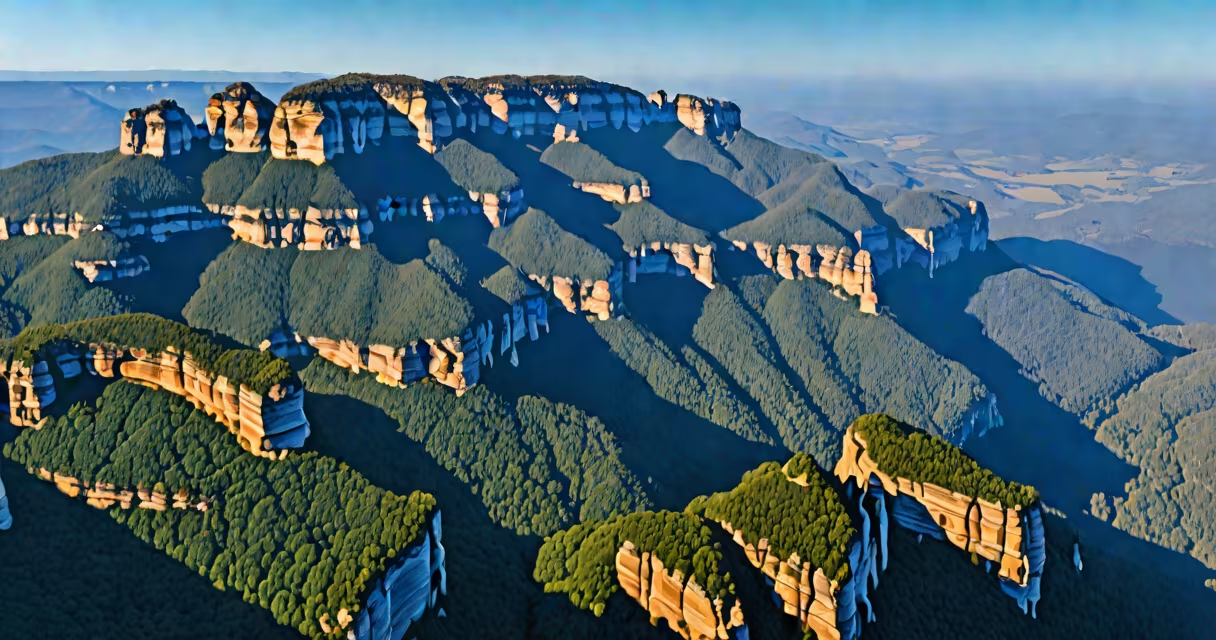
The Blue Mountains NSW are a mountain range in New South Wales, Australia, known for their distinctive blue haze and dramatic sandstone cliffs. This natural wonder stretches approximately 1,100 kilometers west of Sydney and is a UNESCO World Heritage-listed site.
The Blue Mountains derive their name from the blue haze that envelops the area. This phenomenon, known as "distance haze," occurs due to the eucalyptus oil released by the numerous gum trees in the region. When sunlight refracts through this oil, it scatters shorter wavelengths, creating a blue hue visible from afar.
The Blue Mountains are primarily composed of sandstone, shale, and siltstone, formed around 200 million years ago during the Triassic period. The region's rugged terrain was shaped by erosion over millions of years, resulting in steep cliffs, deep valleys, and waterfalls. The most famous geological feature is the Three Sisters, a set of three sandstone rock formations located in the Jamison Valley.
The Blue Mountains' unique geological features make them a significant area for scientific study. According to the New South Wales Government, the region contains some of the most diverse and ancient flora and fauna in Australia.
The Blue Mountains are a popular tourist destination, offering a range of activities such as hiking, sightseeing, and wildlife spotting. The region is home to several national parks, including the Blue Mountains National Park, which covers over 260,000 hectares. Visitors can explore scenic lookouts, waterfalls, and walking trails, including the famous Three Sisters Walk.
For those interested in cultural experiences, the Blue Mountains offer insights into Aboriginal heritage. The area has been inhabited by the Gundungurra and Darug peoples for thousands of years. The Blue Mountains Cultural Centre provides exhibits and programs highlighting the rich Indigenous history of the region.
One common misconception is that the Blue Mountains are named for their color due to minerals or other geological features. However, the blue hue is caused by the eucalyptus oil from the surrounding gum trees.
Another misconception is that the Blue Mountains are a single, continuous range. In reality, the term refers to a broader region that includes various mountain ranges, plateaus, and valleys.
In contrast, the Blue Mountains NSW are younger and feature unique sandstone formations and eucalyptus forests. The region's biodiversity is also distinct, with many endemic species found nowhere else in the world.
During a visit to the Blue Mountains, I had the opportunity to hike the Wentworth Falls track, which offers breathtaking views of the waterfall and surrounding valleys. The trail is well-maintained and suitable for hikers of all skill levels. The experience highlighted the natural beauty and geological diversity of the region, making it a memorable adventure.
The Blue Mountains NSW are a notable natural wonder known for their distinctive blue haze, dramatic sandstone cliffs, and rich biodiversity. Whether exploring the region's geological features, enjoying outdoor activities, or learning about Aboriginal culture, visitors are sure to have an unforgettable experience.