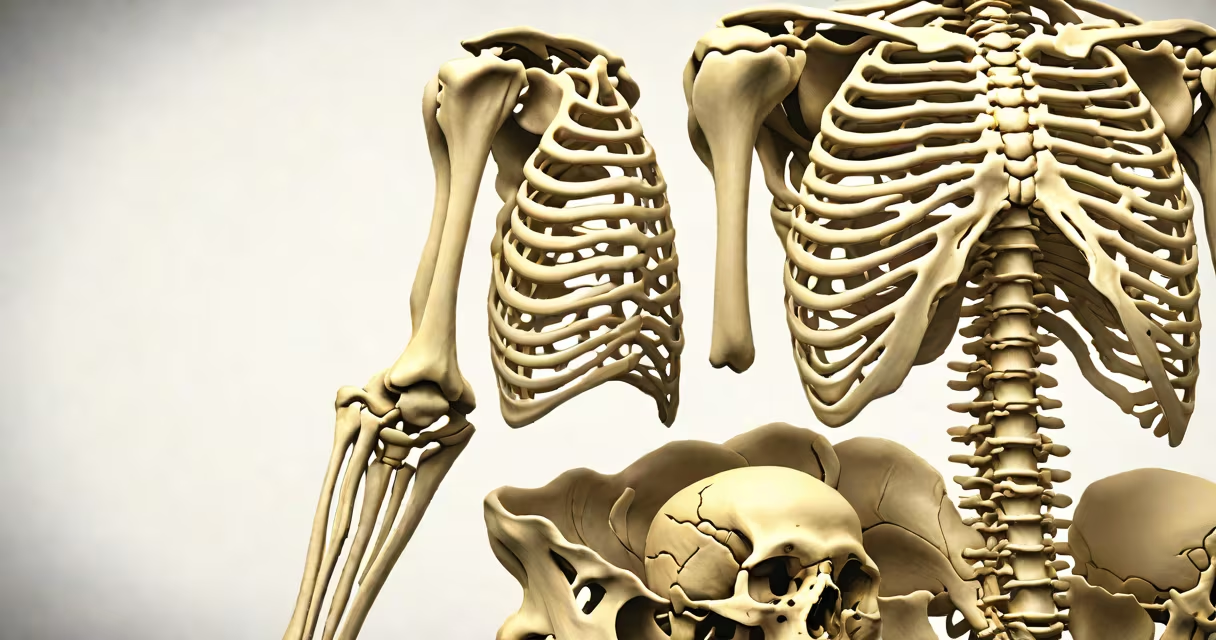
Bones form a protective barrier around important internal organs like the heart, lungs, and brain, absorbing impacts that could otherwise cause fatal damage. This structural defense system works through both direct shielding and strategic positioning.
The skeletal system creates physical barriers using dense bone tissue. The rib cage, for example, encases the heart and lungs while allowing movement. Bones also position organs away from high-impact areas - your brain sits protected inside the skull rather than exposed on your chest.
Bone marrow within these protective structures produces blood cells that help repair tissues damaged during impacts. This dual function makes bones both shields and active participants in bodily maintenance.
| Bone Structure | Protected Organs | Protection Mechanism |
|---|---|---|
| Skull | Brain | Hard outer shell with fluid cushioning |
| Rib Cage | Heart, Lungs | Curved bone plates with flexible joints |
| Pelvis | Reproductive organs | Broad, sturdy bone ring |
| Spine | Spinal cord | Vertebrae with shock-absorbing discs |
Many people believe bones simply act as rigid shields. In reality, they work with other systems. Muscles and ligaments move bones to reposition organs away from threats, while fat pads act as additional cushions between bones and organs.
Another myth is that bone protection is passive. Bones actively remodel themselves in response to stress patterns, thickening in areas subject to frequent impact. This adaptive process helps maintain optimal protection throughout life.
When ribs break from severe impacts, they often cause more damage to underlying organs than the initial trauma. This demonstrates how important bone protection is - when it fails, even moderate forces can cause serious internal injuries. Medical professionals must carefully treat rib fractures to prevent further organ damage during recovery.
While bones protect internal organs, we must also protect our external environment. Learn how to protect your environment through sustainable practices that preserve the natural systems supporting all life.