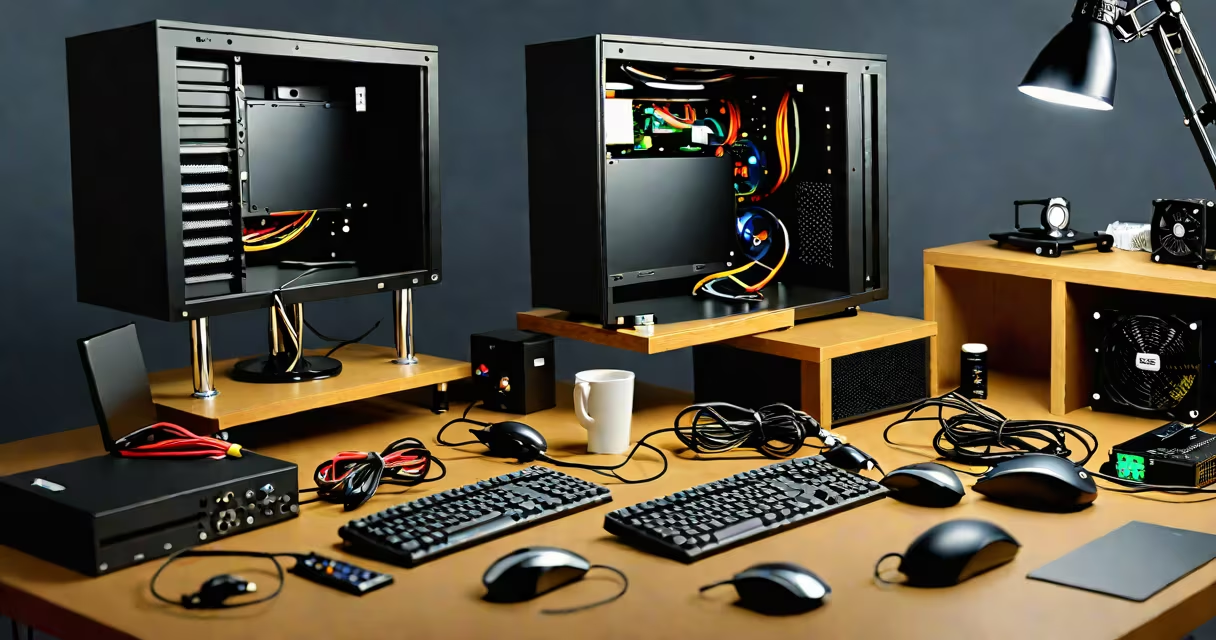
A build a PC helper is an online tool or guide that assists users in selecting compatible computer components and assembling them into a working desktop system. These resources typically provide part compatibility checks, step-by-step assembly instructions, and sometimes even virtual simulations.
Most build a PC helpers follow a similar process. They start by asking users about their budget, intended use (gaming, video editing, etc.), and performance requirements. Based on these inputs, the tool suggests compatible components from different categories like CPUs, GPUs, motherboards, power supplies, and cases.
For example, a popular online tool might recommend an Intel Core i5 processor paired with an ASUS ROG Strix motherboard, an NVIDIA GeForce RTX 3060 graphics card, 16GB of Corsair Vengeance RAM, a 1TB Samsung 970 EVO SSD, a 650W Corsair RM650x power supply, and a NZXT H510 case - all within a $1,200 budget for gaming.
PC building helpers typically offer these key features:
Many people assume building a PC requires advanced technical skills or expensive equipment. In reality, most modern systems can be assembled with basic tools and following straightforward instructions. The biggest challenge is often selecting compatible parts rather than the physical assembly.
Another misconception is that pre-built systems are always better. While they offer convenience, custom builds often provide better performance for the price and allow for future upgrades. According to a 2022 study by PC Gamer, custom-built PCs accounted for 42% of the gaming market, showing significant consumer interest in DIY builds.
PC building helpers are useful in several scenarios:
I've personally used these tools when helping friends build their first gaming PCs. The most challenging part was often finding the right balance between performance and budget, which these tools helped simplify.
When selecting a build a PC helper, consider these factors:
| Factor | Consideration |
|---|---|
| Component database | Look for tools with up-to-date component listings |
| Compatibility checking | Ensure the tool verifies part compatibility |
| Assembly guides | Check if it provides clear, step-by-step instructions |
| Price tracking | Some tools monitor price changes across retailers |
| User reviews | Tools with community ratings can help assess build quality |
According to PCPartPicker's 2023 annual report, their platform checked over 1.2 billion component combinations, demonstrating the scale at which these tools operate.
Once you've selected your components using a build a PC helper, the next steps typically involve:
Remember that while these tools are helpful, they shouldn't replace common sense and careful research. Always double-check component specifications and read recent user reviews before making purchases.