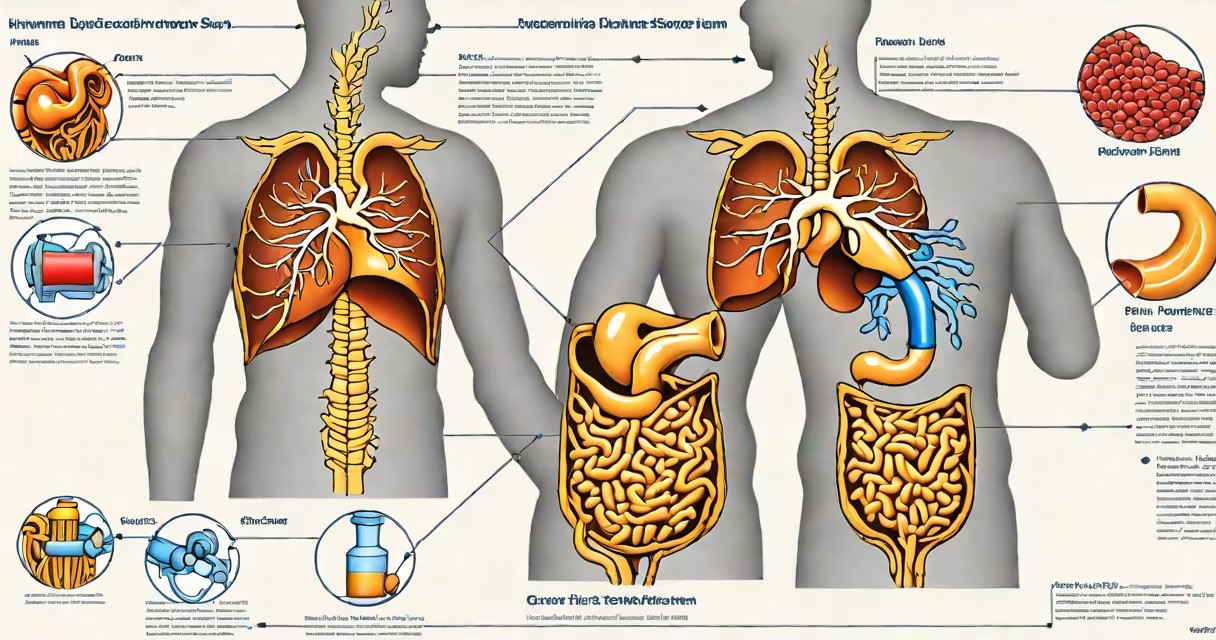
Acid reflux can cause back and chest pain, typically presenting as a burning sensation behind the breastbone that may radiate to the back. This occurs when stomach acid flows backward into the esophagus, irritating its lining and nearby nerves.
When stomach acid enters the esophagus, it triggers inflammation and activates pain receptors. The vagus nerve, which connects the brain to the digestive tract, can transmit this pain to areas beyond the chest, including the back and shoulders. This referred pain often mimics other conditions, leading to misdiagnosis.
| Pain Type | Location | Description |
|---|---|---|
| Heartburn | Chest (behind sternum) | Burning sensation that worsens when lying down |
| Reflux-related back pain | Upper/mid back | Dull ache or sharp pain between shoulder blades |
| Atypical reflux pain | Neck, jaw, arms | Radiating discomfort from referred pain |
Many people mistake reflux-related back and chest pain for heart problems or muscle strain. A study in the Journal of Clinical Gastroenterology found that 60% of patients with chronic reflux experienced back pain, yet only 20% connected it to their digestive issues. The confusion arises because reflux pain:
Unlike heart-related pain, reflux discomfort typically doesn't cause sweating or shortness of breath. However, persistent or severe chest pain should always be evaluated by a medical professional to rule out cardiovascular issues.
To determine if your pain stems from reflux, try this experiment: Keep a food diary tracking meals, activities, and pain episodes. Common triggers include:
If pain patterns align with these triggers, reflux may be the culprit. For persistent symptoms, consult a healthcare provider about indigestion treatments or diagnostic tests like an upper endoscopy.
While occasional reflux is common, seek immediate care if you experience:
These symptoms could indicate a heart attack or other serious conditions requiring urgent evaluation.