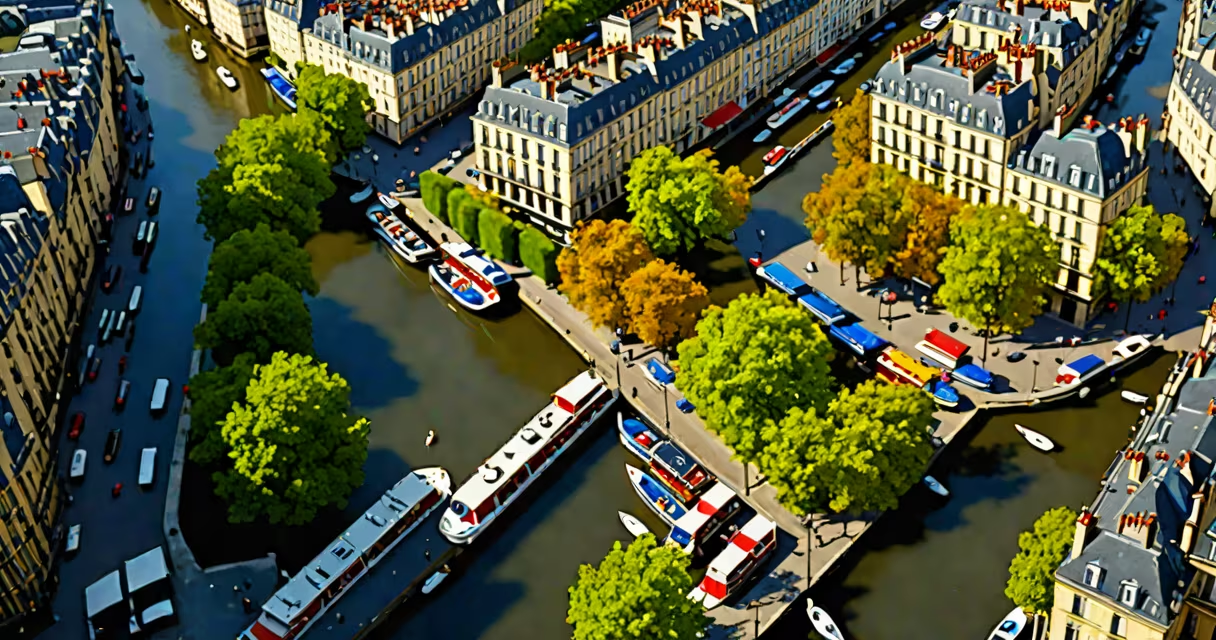
Canal Saint-Martin is a 4.5-kilometer-long waterway in Paris, France, connecting the Canal de l'Ourcq to the Seine River. It features ten bridges, including the rotating Pont Tournant, and is known for its vibrant atmosphere, historic architecture, and recreational activities.
The canal was constructed between 1802 and 1822 under the direction of Napoleon Bonaparte. Its primary purpose was to supply fresh water to Paris, which was facing shortages due to population growth. The canal was designed by Pierre Simon Girard, a prominent engineer of the time.
Originally, the canal was used for transporting goods, including wine, coal, and wood. Today, it serves primarily recreational purposes, though some commercial traffic remains.
The canal is lined with plane trees and features ten bridges, each with unique characteristics. The most notable is the Pont Tournant, a rotating bridge that opens to allow boat passage. Other bridges include the Pont Louis-Philippe, named after the king who ruled during the canal's construction, and the Pont des Arts, a pedestrian bridge popular with locals and tourists alike.
Canal Saint-Martin is a popular spot for picnics, sunbathing, and boating. Visitors can rent electric boats to explore the waterway or enjoy a meal at one of the many cafes and restaurants along the banks. The canal is also a favorite spot for jogging, cycling, and simply relaxing.
In summer, the canal attracts large crowds, especially on weekends. To manage the influx, the city of Paris has implemented measures such as limiting access to certain areas and increasing police presence.
The area around Canal Saint-Martin is home to numerous attractions, including the Musée des Arts et Métiers, which showcases the history of science and technology, and the Musée Picasso, dedicated to the works of the famous artist. The neighborhood is also known for its trendy boutiques, vintage shops, and street art.
The canal has been featured in numerous films and books, contributing to its cultural significance. It is often depicted as a symbol of Parisian life, representing the city's blend of history, culture, and modernity. The canal's unique character has made it a favorite subject for artists and photographers.
According to the City of Paris, the canal receives over 2 million visitors annually, making it one of the most popular tourist destinations in the city.