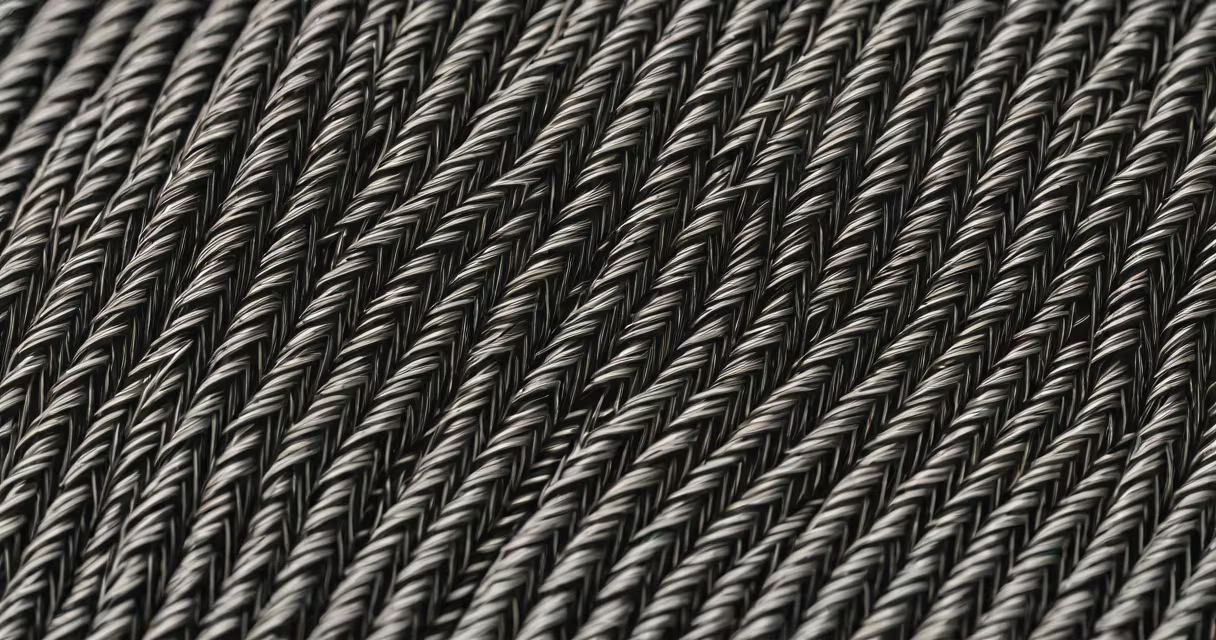
Carbon fiber reinforced polymer (CFRP) is a composite material made of carbon fibers embedded in a polymer matrix, offering strong strength-to-weight ratios. It combines carbon fiber's tensile strength with polymer resin's flexibility.
CFRP gains its properties through two key components working together:
The fibers provide strength while the matrix maintains structural integrity under stress. When force is applied, the polymer distributes it evenly across the fibers, preventing premature failure.
| Type | Key Characteristics | Common Applications |
|---|---|---|
| Unidirectional | Fibers aligned in one direction for maximum strength along that axis | Aircraft wings, high-performance racing car chassis |
| Fabric (woven) | Interlaced fibers in multiple directions for balanced properties | Automotive body panels, sports equipment |
| Short fiber | Chopped fibers dispersed randomly in resin | Consumer electronics cases, low-cost automotive parts |
CFRP's primary advantage is its strength-to-weight ratio (up to 6 times lighter than steel at similar strength). This makes it ideal for applications requiring weight reduction without sacrificing structural integrity.
The aerospace industry uses CFRP extensively in aircraft structures like Boeing's 787 Dreamliner (50% composite by weight) and Airbus A350 (53%). The material reduces fuel consumption through weight savings while maintaining crashworthiness.
Automotive manufacturers employ CFRP in high-performance vehicles and electric cars to improve energy efficiency. For example, the BMW i8 uses CFRP in its passenger cell and roof to reduce weight by 30% compared to steel.
Sports equipment benefits from CFRP's stiffness and vibration damping properties. Tennis rackets, golf clubs, and bicycle frames incorporate the material to improve performance.
Many assume CFRP is simply a more advanced form of fiberglass. While both are composite materials, CFRP offers higher strength (5-10 times greater tensile strength) and stiffness compared to fiberglass.
Another misconception is that CFRP is always the best material choice. While it excels in specific applications, its high cost (3-10 times more expensive than aluminum) and manufacturing complexity limit widespread adoption in price-sensitive industries.
Contrary to popular belief, CFRP isn't inherently brittle. Properly manufactured CFRP exhibits excellent toughness and impact resistance, making it suitable for structural applications.
Most CFRP parts are produced using one of these methods:
Each method offers different advantages for production speed, part complexity, and material properties. The choice depends on the specific application requirements.
I've personally worked with CFRP in a bicycle frame manufacturing facility. The most surprising aspect was handling raw carbon fiber sheets - despite their reputation for strength, they feel surprisingly fragile and flexible before curing. This highlights how important the manufacturing process is in developing the material's final properties.