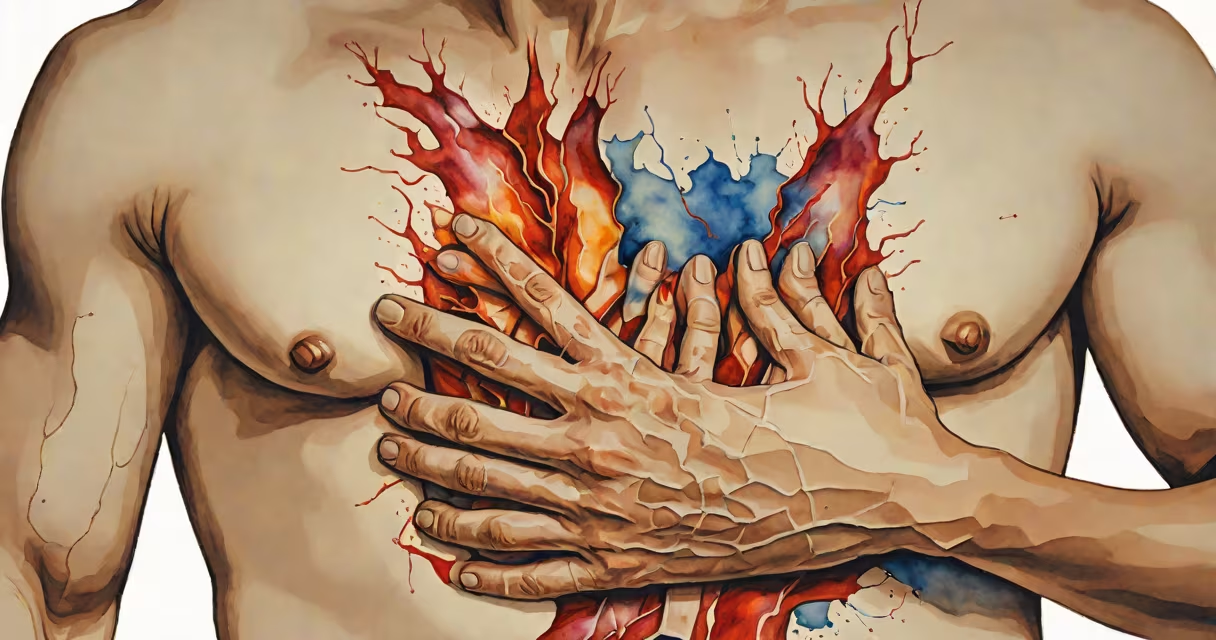
Chest pain that spreads to the left arm typically indicates reduced blood flow to the heart, often from coronary artery disease. This symptom may signal a heart attack or angina, but other conditions can mimic it.
When heart muscle doesn't receive enough oxygen-rich blood, it triggers pain signals. Nerves in the heart share pathways with nerves in the left arm, creating referred pain. This mechanism explains why heart-related discomfort often radiates to the left side.
The most serious cause is coronary artery disease, which narrows arteries supplying the heart. Other possibilities include:
Call emergency services immediately if pain lasts more than five minutes, feels crushing or squeezing, or occurs with shortness of breath, nausea, or sweating. These often indicate a heart attack.
Many assume all left-sided chest pain signals heart trouble. However, gas pain in left arm or acid reflux can cause similar sensations. The American Heart Association notes that women often experience subtler symptoms than men.
Heart-healthy habits like regular exercise, balanced diet, and avoiding smoking reduce risks. For non-cardiac causes, proper warm-ups before exercise and good posture help prevent muscle strains.
If diagnosed with angina, medications like nitrates or beta-blockers may help. Physical therapy addresses nerve compression issues.