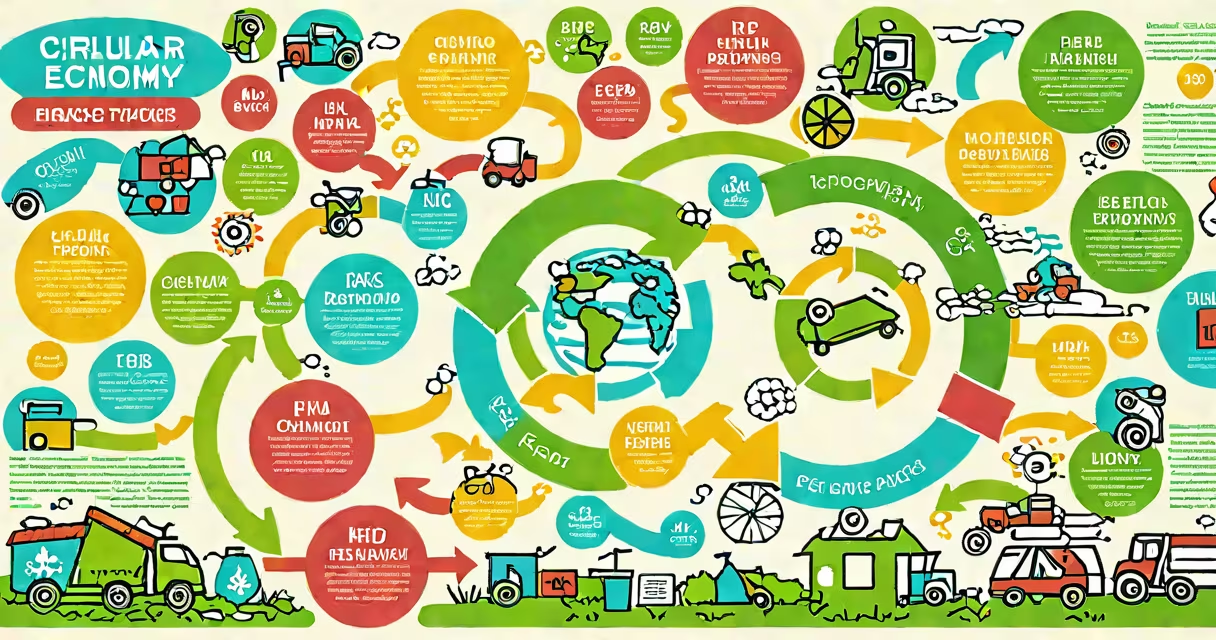
A circular economy plastic waste system keeps plastic materials in use through recycling, repurposing, and redesign rather than discarding them. This approach minimizes waste and environmental harm by treating plastic as a resource.
Traditional linear economies follow a "take-make-waste" model, where plastic is used once and then discarded. In contrast, a circular economy for plastic waste focuses on reuse, recycling, and composting. For example, a water bottle made from recycled plastic can be collected, cleaned, and turned into a new bottle or another product, such as a fleece jacket.
Circular economy models for plastic waste include:
For instance, companies like Evocycle design products with circular economy principles in mind, ensuring they can be easily disassembled and recycled.
Circular economy plastic waste systems are adopted by businesses, governments, and consumers worldwide to reduce plastic pollution. According to the Ellen MacArthur Foundation, circular economy strategies can cut global plastic waste by 80% by 2040. For example, the European Union aims to make all plastic packaging recyclable or reusable by 2030.
Many people confuse circular economy plastic waste with traditional recycling. While both involve reprocessing plastic, circular economy systems focus on keeping materials in use indefinitely through continuous cycles of reuse and recycling. Traditional recycling often results in downgraded materials that eventually end up in landfills.
Another misconception is that circular economy systems are only for large corporations. Small businesses and individuals can also participate by choosing products made from recycled materials and properly sorting their waste for recycling.
Consider a plastic water bottle. In a linear economy, it might be used once and then thrown away, ending up in a landfill or the ocean. In a circular economy, the bottle is collected, cleaned, and melted down to create a new bottle or another plastic product. This process can be repeated multiple times, reducing the need for new plastic production.
For example, The Coca-Cola Company has committed to using 50% recycled material in its bottles by 2030, demonstrating a shift toward circular economy practices.
I visited a local recycling facility that processes plastic waste into pellets for new products. Seeing the machinery and the meticulous sorting process firsthand reinforced how critical proper recycling practices are for a circular economy. The facility's manager emphasized that even small changes in consumer behavior, like rinsing containers before recycling, can improve the quality of recycled materials.
Circular economy plastic waste systems offer a sustainable solution to the global plastic pollution crisis. By focusing on reuse, recycling, and redesign, these systems keep plastic materials in use longer, reducing the need for new plastic production and minimizing environmental impact. Adopting circular economy principles can help businesses and individuals contribute to a cleaner, more sustainable future.