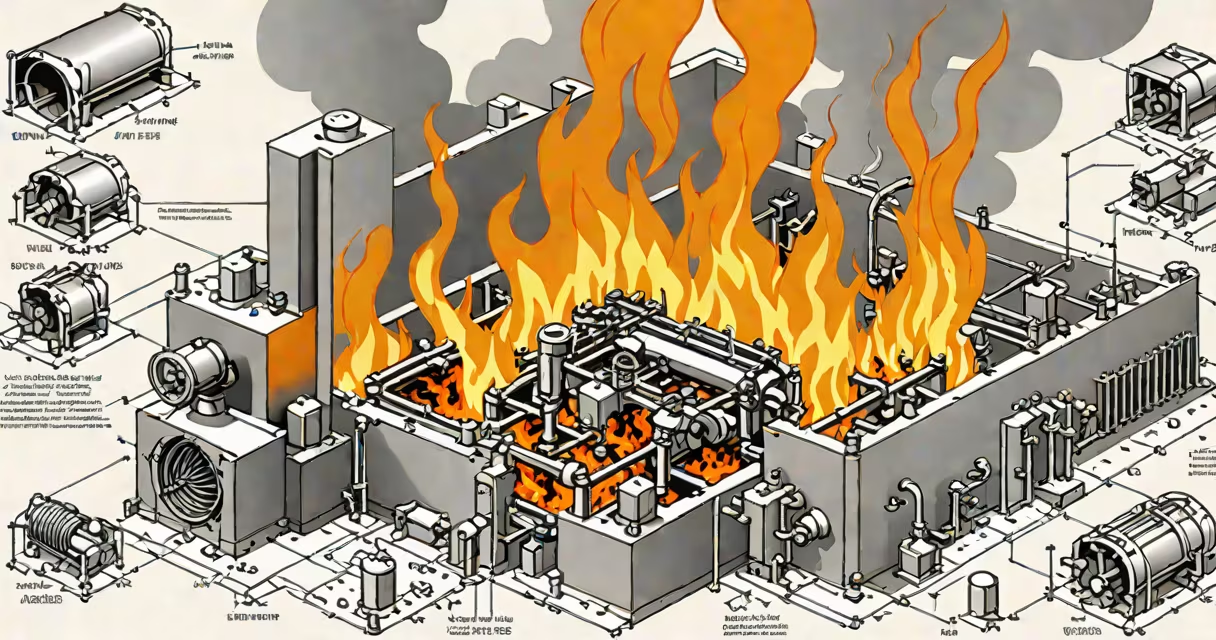
Class D fires involve combustible metals such as magnesium, titanium, potassium, sodium, and lithium. These fires require specialized dry powder extinguishers designed to smother the flames without causing dangerous chemical reactions.
Combustible metals burn at extremely high temperatures, often exceeding 1,652°F (900°C). When exposed to oxygen, these metals can ignite spontaneously or react violently with water or other common extinguishing agents. The fire spreads rapidly, releasing toxic fumes and potentially causing explosions.
The most common metals involved in Class D fires include:
These metals are often found in industrial settings, laboratories, and manufacturing plants where they are used in alloys, batteries, and chemical processes.
Class D fires typically occur in environments where combustible metals are processed, stored, or handled. Common scenarios include:
These fires are particularly hazardous because standard water-based extinguishers can exacerbate the situation by causing violent reactions with the burning metal.
Many people mistakenly believe that water or foam extinguishers can be used on Class D fires. However, water reacts explosively with alkali metals like sodium and potassium, while foam extinguishers are ineffective against metal fires., CO2 extinguishers, which are suitable for Class B and C fires, do not provide adequate coverage for Class D fires.
To safely extinguish a Class D fire, specialized dry powder extinguishers are required. These extinguishers contain fine powders such as graphite, copper, or sodium chloride, which smother the flames and prevent oxygen from fueling the fire. The powder forms a crust over the burning metal, effectively cutting off the oxygen supply and extinguishing the fire.
For example, in a laboratory setting where a sodium metal fire has broken out, a Class D extinguisher containing sodium chloride powder would be the appropriate choice. The extinguisher should be aimed at the base of the fire, and the powder should be applied in a sweeping motion to cover the entire area of the fire.
According to the National Fire Protection Association (NFPA), it is important to have the right type of extinguisher readily available in areas where combustible metals are present. Regular training and awareness programs should be conducted to ensure that personnel are familiar with the proper use of Class D extinguishers and the specific hazards associated with metal fires.
In my experience working in a metal fabrication shop, we had a dedicated storage area for Class D extinguishers near the welding stations. During a safety drill, we practiced using the extinguishers on controlled burns of magnesium shavings. The dry powder effectively smothered the flames, preventing any dangerous reactions.