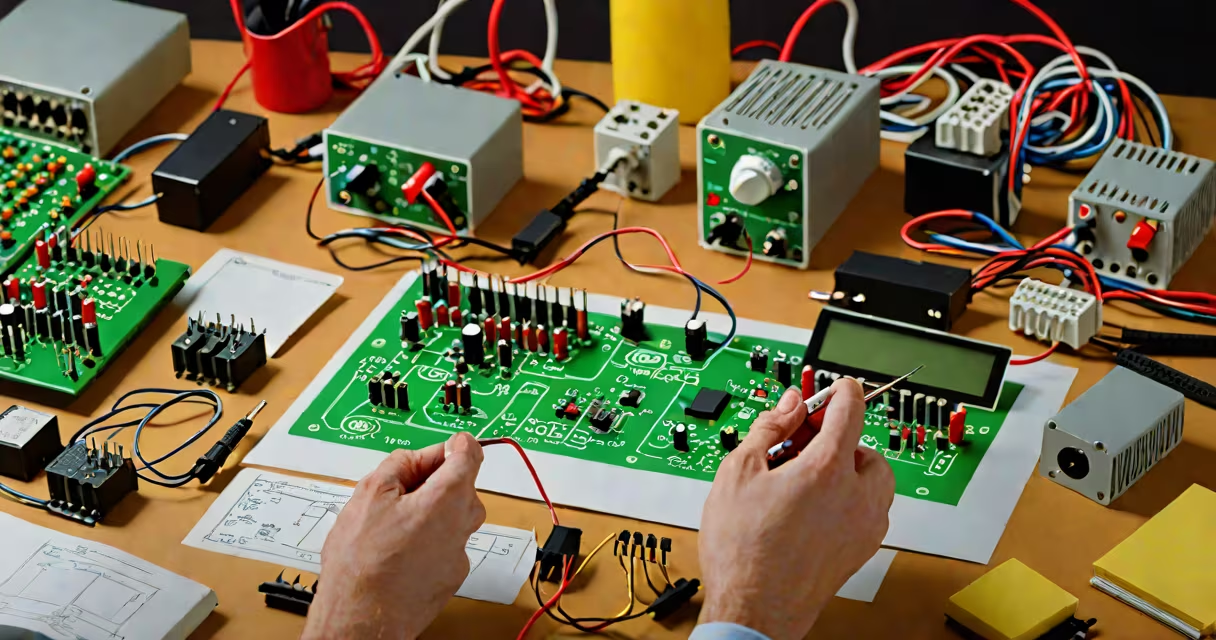
Electrical engineering programs require courses in circuits, programming, electromagnetics, and electronics. These classes build foundational skills for designing and analyzing electrical systems.
Most bachelor's programs in electrical engineering follow a structured curriculum divided into general education, math/science prerequisites, core engineering courses, and electives. The core courses typically include:
This foundational course covers Ohm's Law, Kirchhoff's laws, and network theorems. Students learn to analyze DC and AC circuits using tools like SPICE software. For example, a typical lab might involve building and testing a filter circuit to observe frequency response.
This course explores Maxwell's equations, wave propagation, and antenna theory. Labs may include measuring the radiation pattern of a dipole antenna. Students apply these principles to real-world problems like wireless communication and radar systems.
Many assume electrical engineering is solely about wiring and circuits. However, modern programs also emphasize software skills, robotics, and renewable energy systems. For instance, a course in power systems might cover smart grids and energy storage technologies.
| Course Type | Electrical Engineering | Computer Engineering |
|---|---|---|
| Core Focus | Power systems, control systems | Computer architecture, embedded systems |
| Example Course | Electric machines | Microprocessors |
During my internship at a renewable energy firm, I applied concepts from my power systems class to design a microgrid. This project required knowledge of both electrical engineering fundamentals and basic electrical engineering principles like voltage regulation.
The classes needed for electrical engineering prepare students for careers in industries ranging systems. Programs balance theoretical knowledge with hands-on labs, ensuring graduates are ready for real-world challenges.